There are 27 varieties of hummus at the local grocery store in my neighborhood in Cincinnati. Strictly speaking, it's not the local grocery store; it's one of three all on the same block. Staring at the 27 varieties of hummus tonight, the same string of thoughts and questions snake into my mind as have several times this week: Why does anyone need this many kinds of hummus? Why does anyone need this many varieties of anything? Do these people know what luxury this is? Do they know that people in their own country go without all of this? Without 27 varieties of hummus, without three groceries stores in town, without all the jobs the stores provide, without the fresh produce they sell? Six months ago, did I know?
I've been visiting home this week for Thanksgiving and it's the first time I've returned since leaving Ohio in late May. In my time in the Delta, I've been to Memphis and Jackson for a day here and there, but I haven't spent any extended time out of the Delta since leaving home. This week has been my first long exposure to the way things are outside of my bubble, and it's been a complicated week.
When volunteers and missionaries return from developing countries, they often report feelings of isolation and a sense of being overwhelmed by this place they used to call home. My experience is obviously very different from someone who has spent an extended time in a completely foreign country and culture, but that confusing lack of belonging in the most familiar setting has become one I understand. It's hard not to be overwhelmed and a little put off by the fact that there are more businesses in the Philadelphia Airport than there are in the town I teach in. Driving down a main road in a wealthier suburb north of Cincinnati, the inequity becomes staggering as I wonder aloud to my mother why anyone could need so many restaurants on one street. It doesn't seem right that such abundance should exist in the same nation where some of my students live in homes without running water. Starbucks tastes different from what it did last year. It turns out that knowing the statistics on poverty and inequity does not affect the taste of coffee the way that six months of living and teaching among it does.
In between the errands, there is time for family and friends. This time is sometimes refreshing and sometimes not. Sometimes it is an inquisition of well-meaning relatives demanding answers to repeated questions and often desiring a neatly-packaged, one-sentence explanation of exactly what makes my job so difficult (It's not the kids. Stop asking me if it's the kids). Other times it is the truly wonderful people whom I can speak honestly with either because they have been somewhere like where I am now and truly understand or because they are people who truly know me and my aversion to repeated lines of questioning and will simply listen without judgment to whatever it is I want to share in that moment. No matter whom I speak to I work to strike the right balance between speaking the harsh and uncomfortable truth about the place where I teach and working to change the outsider's narrative and perception of Mississippi and it's people.
At other times I rest and work to get ahead to make the three weeks between me and Christmas go a little more smoothly. The week goes by fast. I haven't yet had time to reconcile these 2 separate Americas, this one with it's 27 versions of hummus and the one I will return to where the black kids and the white kids go to separate schools. A week isn't a long enough time to do that, I suppose. No length of time really is.
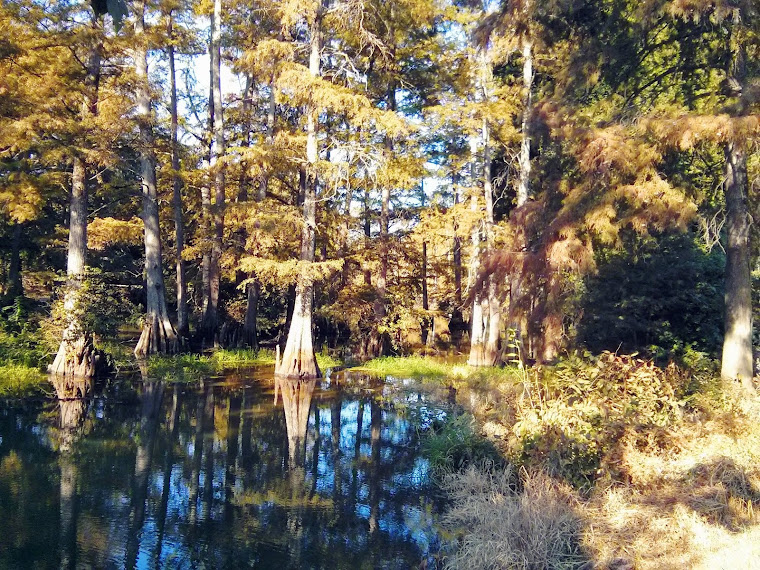
Bayou
Friday, November 27, 2015

Sunday, November 8, 2015
October is Over (Thank God)
There is something in teaching called "Darktober." It runs roughly through the month of October and, perhaps, a little bit into November. It's characterized by exhaustion, few or no days off, the end of the first grading period, and occasional fits of crying in your car for no apparent reason.
Late fall is a time of year that is notoriously rough for all teachers, but it's particularly hard on new teachers, or at least it was on me. Days were getting shorter, my kids were getting restless, and the end of the grading period with all it's paperwork was getting closer. In the midst of all of this chaos, I tried to push my emotions to the side and just deal with the day to day. Yes, I was tired. Yes, I was frustrated. Yes, I was losing hope. But dealing with all of that could wait because fall break was coming, grades were due, and for the first time I started to feel like I was running out of time with my students. The time for teaching was now; the time for feeling things about teaching was later.
Then it rained. It rained and it rained and it rained from Sunday afternoon all the way through Monday morning. I was coming off a good week that Monday. Fall break had given me a chance to breathe and see my parents and my kids had done particularly well on their quiz the previous Friday. I was all set for another good week despite the torrential downpour, but there's nothing quite like rain to remind you of the reality of your situation and the reality of my situation is simple: I teach in one of the poorest counties in the poorest state in the country. If I had lost sight of that reality, that morning it was hard to miss as I walked through the pouring rain on our flooded outdoor campus among the old buildings with leaky roofs to the copy room where I was greeted by the notable and mysterious absence of one of the copiers (the good one, in fact). There I was, standing in the copy room, slightly drenched and trying to figure out how to teach without any copies when it finally happened: I ran out of patience.
I ran out of patience with everything that Monday morning. I was out of patience with my students. ("You turn your homework into the folder. Where you've turned it in every single day since the beginning of the year. EVERY. SINGLE. DAY.") I was out of patience with myself. (Shouldn't I get it by now? Shouldn't I know what I'm doing by now? I can't keep messing up like this, for my students' sake and for mine.) But most of all I was out of patience with the system.
I was and am out of patience with this miserably failing system. I am out of patience with a system that robbed me of 11 out of 39 instructional days first quarter for testing (That's 28% of instructional time spent testing, if you were wondering). I am out of patience with a system that punishes students and schools in areas of systemic poverty by robbing them of even more resources when the schools fail to meet arbitrary measures of success. Most of all, I am out of patience with a system that treats teachers and students like the problem and not like the solution.
That day when I ran out of patience I walked to the office and filled out the paperwork to take a personal day later in the week. A day to myself to process and relax and get a little ahead of the game was just what I needed and ever since I've felt much better and more in control. I still feel out of patience, but I'm not out of energy or passion or desire to be here. When I'm running low on those things, my students help me find them back. I really, really mean it when I say that I love them, and that love kept me at it all the way through October and into the more hopeful weeks of November.
Now, as things start to look up again, it's a little bit easier to sit down and look at October from a critical distance which is why I'm writing about it now instead of as it was happening. The first week of November went by quickly and victories in the classroom are starting to seem closer and more significant. A smile from a student who hasn't cracked a smile since September, a strong performance task from a student who struggles with completing problems independently, and a kind remark from a student who I had previously had a strained relationship with. It's these things that help me put October behind me and look forward to better days to come because better days will surely come.
Late fall is a time of year that is notoriously rough for all teachers, but it's particularly hard on new teachers, or at least it was on me. Days were getting shorter, my kids were getting restless, and the end of the grading period with all it's paperwork was getting closer. In the midst of all of this chaos, I tried to push my emotions to the side and just deal with the day to day. Yes, I was tired. Yes, I was frustrated. Yes, I was losing hope. But dealing with all of that could wait because fall break was coming, grades were due, and for the first time I started to feel like I was running out of time with my students. The time for teaching was now; the time for feeling things about teaching was later.
Then it rained. It rained and it rained and it rained from Sunday afternoon all the way through Monday morning. I was coming off a good week that Monday. Fall break had given me a chance to breathe and see my parents and my kids had done particularly well on their quiz the previous Friday. I was all set for another good week despite the torrential downpour, but there's nothing quite like rain to remind you of the reality of your situation and the reality of my situation is simple: I teach in one of the poorest counties in the poorest state in the country. If I had lost sight of that reality, that morning it was hard to miss as I walked through the pouring rain on our flooded outdoor campus among the old buildings with leaky roofs to the copy room where I was greeted by the notable and mysterious absence of one of the copiers (the good one, in fact). There I was, standing in the copy room, slightly drenched and trying to figure out how to teach without any copies when it finally happened: I ran out of patience.
I ran out of patience with everything that Monday morning. I was out of patience with my students. ("You turn your homework into the folder. Where you've turned it in every single day since the beginning of the year. EVERY. SINGLE. DAY.") I was out of patience with myself. (Shouldn't I get it by now? Shouldn't I know what I'm doing by now? I can't keep messing up like this, for my students' sake and for mine.) But most of all I was out of patience with the system.
I was and am out of patience with this miserably failing system. I am out of patience with a system that robbed me of 11 out of 39 instructional days first quarter for testing (That's 28% of instructional time spent testing, if you were wondering). I am out of patience with a system that punishes students and schools in areas of systemic poverty by robbing them of even more resources when the schools fail to meet arbitrary measures of success. Most of all, I am out of patience with a system that treats teachers and students like the problem and not like the solution.
That day when I ran out of patience I walked to the office and filled out the paperwork to take a personal day later in the week. A day to myself to process and relax and get a little ahead of the game was just what I needed and ever since I've felt much better and more in control. I still feel out of patience, but I'm not out of energy or passion or desire to be here. When I'm running low on those things, my students help me find them back. I really, really mean it when I say that I love them, and that love kept me at it all the way through October and into the more hopeful weeks of November.
Now, as things start to look up again, it's a little bit easier to sit down and look at October from a critical distance which is why I'm writing about it now instead of as it was happening. The first week of November went by quickly and victories in the classroom are starting to seem closer and more significant. A smile from a student who hasn't cracked a smile since September, a strong performance task from a student who struggles with completing problems independently, and a kind remark from a student who I had previously had a strained relationship with. It's these things that help me put October behind me and look forward to better days to come because better days will surely come.
Saturday, October 10, 2015
Delta Love: You Are Not An Island
Fall, I think, is a time for gratitude. Thanksgiving looms and quiet, cool weekends lend themselves to time for reflection. The changing seasons make the quick passage of time more obvious and it is impossible not to take some time to ruminate on life.
My first fall in Mississippi has made me thankful for the monarch butterflies that are flying south for winter. I am grateful for the cool breezes and the storms that sweep across the Delta bringing rain and respite from the still persistent heat. I am also thankful for the arrival of fall break this week, signaling the end of the first nine weeks. By some small miracle I've made through a quarter of the year, though not without many bumps in the road.
More than anything this fall, I am thankful for the support I've received, especially the support from other teachers. New teachers receive a lot of advice from everyone: Don't smile until Christmas. Don't cry in front of your students. Have high expectations. Go home early at least one day a week. That's all great, but the piece of advice I think is most important for new teachers is this: Reach out. Make friends. Remember that you are not alone.
The job of a teacher is hard and it can feel isolating. For large portions of the day you are alone in your room with 20 or more students. At times you will inevitably feel alone in your struggle, but you are not an island and there are people all around you who will help you through this journey.
For me, one of the most meaningful support systems I've had is the other teachers at my school and a rough last week of the grading period has left me feeling especially grateful for them. I can say with 100% confidence that I would not have made it through the year so far without them. Countless times the special education teacher who works with the math department has advised and counseled me so many times and has been endlessly patient as I fumble through my first year and try to get get a grip. More than once he has coached me through a crisis of confidence and I could not be more grateful for his presence in my classroom and his patience and generosity. The department head always has my back and is constantly helping me out, sharing lesson plans and answering my innumerable questions. The teacher next door is always looking out for me, reminding me when I most need it that I'm doing a good job, all things considered. There is a history teacher who regularly takes new teachers under her wing and will stop at nothing to help us out. She's helped me plan lessons at the last minute and rearrange my classroom to make it more conducive to learning, but more than that she's just been kind. So often it is talking and laughing with her at the end of a particularly hard day that makes me feel human again.
It doesn't stop with the veteran teachers, though. I am just as grateful for the new and relatively new teachers as I am for those who have been in the trenches for a little while longer. After all, it's these teachers who best know what you're going through since they're right there with you. I am so grateful for the new teachers at my school who I've been on this crazy ride with. It's these teachers who I've compared notes with and commiserated with. We celebrate victories together and laugh at the craziness of all of it. It is their classrooms I escape to in the morning when I need a quiet moment or during my planning period when I need a pep talk. It's also their classrooms I return to at the end of the day to cry or laugh when I need to. I can only hope that I have managed to be there for them in the way they have been there for me.
New teachers have all sorts of voices trying to offer advice and support. There will be mentors and coaches and consultants, but at the end of the day the best support is usually right next door or across the hallway. I often tell my students that in our classroom we are a team and your team is your family. I am grateful this fall to not only have such a special student team, but also a wonderful teacher team. I may be 600 miles away from my real family, but if team means family then my teacher team is the best Mississippi family I could ask for.
My first fall in Mississippi has made me thankful for the monarch butterflies that are flying south for winter. I am grateful for the cool breezes and the storms that sweep across the Delta bringing rain and respite from the still persistent heat. I am also thankful for the arrival of fall break this week, signaling the end of the first nine weeks. By some small miracle I've made through a quarter of the year, though not without many bumps in the road.
More than anything this fall, I am thankful for the support I've received, especially the support from other teachers. New teachers receive a lot of advice from everyone: Don't smile until Christmas. Don't cry in front of your students. Have high expectations. Go home early at least one day a week. That's all great, but the piece of advice I think is most important for new teachers is this: Reach out. Make friends. Remember that you are not alone.
The job of a teacher is hard and it can feel isolating. For large portions of the day you are alone in your room with 20 or more students. At times you will inevitably feel alone in your struggle, but you are not an island and there are people all around you who will help you through this journey.
For me, one of the most meaningful support systems I've had is the other teachers at my school and a rough last week of the grading period has left me feeling especially grateful for them. I can say with 100% confidence that I would not have made it through the year so far without them. Countless times the special education teacher who works with the math department has advised and counseled me so many times and has been endlessly patient as I fumble through my first year and try to get get a grip. More than once he has coached me through a crisis of confidence and I could not be more grateful for his presence in my classroom and his patience and generosity. The department head always has my back and is constantly helping me out, sharing lesson plans and answering my innumerable questions. The teacher next door is always looking out for me, reminding me when I most need it that I'm doing a good job, all things considered. There is a history teacher who regularly takes new teachers under her wing and will stop at nothing to help us out. She's helped me plan lessons at the last minute and rearrange my classroom to make it more conducive to learning, but more than that she's just been kind. So often it is talking and laughing with her at the end of a particularly hard day that makes me feel human again.
It doesn't stop with the veteran teachers, though. I am just as grateful for the new and relatively new teachers as I am for those who have been in the trenches for a little while longer. After all, it's these teachers who best know what you're going through since they're right there with you. I am so grateful for the new teachers at my school who I've been on this crazy ride with. It's these teachers who I've compared notes with and commiserated with. We celebrate victories together and laugh at the craziness of all of it. It is their classrooms I escape to in the morning when I need a quiet moment or during my planning period when I need a pep talk. It's also their classrooms I return to at the end of the day to cry or laugh when I need to. I can only hope that I have managed to be there for them in the way they have been there for me.
New teachers have all sorts of voices trying to offer advice and support. There will be mentors and coaches and consultants, but at the end of the day the best support is usually right next door or across the hallway. I often tell my students that in our classroom we are a team and your team is your family. I am grateful this fall to not only have such a special student team, but also a wonderful teacher team. I may be 600 miles away from my real family, but if team means family then my teacher team is the best Mississippi family I could ask for.
Sunday, August 30, 2015
Everything Is On Fire
It's harvest season in the Delta and with harvest season comes fire. Farmers light fire to fields in controlled burns to clear crop residue and kill weeds before the next planting season rolls around. The fires help nourish the soils and allow for a fresh and healthy start in spring.
The first time I saw a field fire, I found it quite odd. Growing up in a suburban area, smoke was never a good sign, but I've quickly come to realize that down here smoke and fire are just another element of life in the Mississippi Delta (and possibly one reason that the Delta is home to so many asthmatics). Over the last week or so I've probably seen 3 or 4 fires burning everyday along the rural highway as I drive home from work.
Today, driving to the neighboring town, I drove through a cloud of smoke from a fire burning especially close to the road and started to think of my classroom. This week it felt like everything in my classroom and the fields that surround it was on fire.
For the last three weeks, my students have talked while I was talking and played around while they were supposed to be working. What's more, they haven't learned the content they were supposed to have learned by now and that's mostly on me. Everyday I struggle with the feeling that I am running out of resources: Out of paper, out of ink, out of money, out of patience, out of time. Everyday I struggle.
I keep waiting for it to get better, for the day I magically show up and my students respect me and listen intently as I speak and grasp the material that I put in front of them, but that day's not coming unless I do something to bring it about. The truth is my students don't pay attention and struggle with the material mostly because of me. To say my students hold no responsibility for their behavior and their grades would be a lie, but it would be just as facetious to say that I am innocent in all of this. I can do so much better and sometimes I find that I am most upset not because of anything my students do but because of all of the things I know I am failing to do. I know that my classes aren't engaging enough and that I don't scaffold assessments enough so when my students fail quizzes I'm not upset with them for failing at a quiz, I'm upset with myself for failing my students.
To say that I know I'm not doing good enough would be an understatement. I know exactly how much better I need to be, but fortunately I also know that I can be better and I've committed to a plan to ensure it. I'm ditching the lecture-practice problems format for something more challenging and fun for my students. On Thursday, I gave my last lecture and tomorrow I'm going in with a new mindset and a new game plan. We're going to use math centers and project based learning and all sorts of exciting and engaging instructional strategies. Yesterday I wrote my first set of lesson plans based on my new model and for the first time I was excited as I wrote lesson plans. It's the dawn of a new week and I'm so ready for it.
The fires have burned in my classroom for almost a month now and it's time to put them out. The fields of my classroom will be left rich with all the things learned from the fires of past mistakes. Tomorrow is a new day. The fires will end and planting season will arrive.
The first time I saw a field fire, I found it quite odd. Growing up in a suburban area, smoke was never a good sign, but I've quickly come to realize that down here smoke and fire are just another element of life in the Mississippi Delta (and possibly one reason that the Delta is home to so many asthmatics). Over the last week or so I've probably seen 3 or 4 fires burning everyday along the rural highway as I drive home from work.
Today, driving to the neighboring town, I drove through a cloud of smoke from a fire burning especially close to the road and started to think of my classroom. This week it felt like everything in my classroom and the fields that surround it was on fire.
For the last three weeks, my students have talked while I was talking and played around while they were supposed to be working. What's more, they haven't learned the content they were supposed to have learned by now and that's mostly on me. Everyday I struggle with the feeling that I am running out of resources: Out of paper, out of ink, out of money, out of patience, out of time. Everyday I struggle.
I keep waiting for it to get better, for the day I magically show up and my students respect me and listen intently as I speak and grasp the material that I put in front of them, but that day's not coming unless I do something to bring it about. The truth is my students don't pay attention and struggle with the material mostly because of me. To say my students hold no responsibility for their behavior and their grades would be a lie, but it would be just as facetious to say that I am innocent in all of this. I can do so much better and sometimes I find that I am most upset not because of anything my students do but because of all of the things I know I am failing to do. I know that my classes aren't engaging enough and that I don't scaffold assessments enough so when my students fail quizzes I'm not upset with them for failing at a quiz, I'm upset with myself for failing my students.
To say that I know I'm not doing good enough would be an understatement. I know exactly how much better I need to be, but fortunately I also know that I can be better and I've committed to a plan to ensure it. I'm ditching the lecture-practice problems format for something more challenging and fun for my students. On Thursday, I gave my last lecture and tomorrow I'm going in with a new mindset and a new game plan. We're going to use math centers and project based learning and all sorts of exciting and engaging instructional strategies. Yesterday I wrote my first set of lesson plans based on my new model and for the first time I was excited as I wrote lesson plans. It's the dawn of a new week and I'm so ready for it.
The fires have burned in my classroom for almost a month now and it's time to put them out. The fields of my classroom will be left rich with all the things learned from the fires of past mistakes. Tomorrow is a new day. The fires will end and planting season will arrive.
Saturday, August 22, 2015
121 Reasons to Come Back
My second full week of teaching has shown me quite quickly that almost nothing about this job is easy. If you are looking for a job that is easy, then turn fast and run in the opposite direction of teaching.
Lesson planning is certainly not easy. Attempting to make geometry engaging to high schoolers is probably the hardest thing I've ever done and most of the time I fail (I can tell by the way their eyes glaze over when I start to talk.)
Helping all of the students who need assistance during independent practice is not easy. There are 22 of them and only 1 of me and, despite my best efforts, I have not yet mastered the ability to be in two places at once (I keep trying, though. If there were one skill that could improve my quality of life, this would be it.)
Deciding whether to buy more pencils for the classroom or some desk organizers is not easy. On the one hand, my kids need pencils, but on the other hand if my desk weren't such a mess I might not feel like I was going insane every time I tried to sit down and do work. (Ultimately, I will buy the pencils and wait for my paycheck to organize my desk. My students' needs cannot wait; mine can.)
Getting up at 5:30 am every day is not easy. In the past, getting up in the morning, usually at 8 or 9, was the single hardest part of my day and it remains an immensely challenging part of my life (Of course, getting up is one of the easiest parts of my day, now. It really only gets harder from there.)
Managing a classroom is definitely not easy (SO NOT EASY.)
Laying awake at night thinking about students and trying to figure out how to do better for them is not easy. As I try to fall asleep my mind wanders, inevitably finding it's way to my classroom where it walks up and down the rows of desks, wondering how to make accommodations for this student and how to challenge that student and how to teach all of those students who fall somewhere in between failing and excelling, all in the same class at the same time learning the same material (No wonder I am always tired).
Holding back tears when well-meaning people ask you if you are okay is not easy. "I'm fine. I'm fine" I say, as if the complete exhaustion and stress is not evident in every feature of my face and body. One day I will be fine, even if it's not today. Holding back tears was especially hard this week when it was not a teacher asking me if I was okay but a student. He heard about something that happened earlier in the day and stopped by after school to make sure I was alright. If earlier in the day I had wanted to cry because everything was going wrong, then in that moment I wanted to cry because for one minute everything was going right (Maybe not all the tears are bad.)
There is one thing, though, that is easy. Loving my students is easy. They make me laugh. Why wouldn't I laugh when my student writes that "Geometry is important because when a toddler asks you what shape an object is you can tell them about the angles, too"? They make me cry, sometimes sad tears, sometimes happy tears. They make me question. They make me question where the ball was dropped so that a student who couldn't add or subtract made it to 10th grade geometry and, more importantly, how I can ensure that I'm not the next in line to drop that ball. They make me hope. They are not jaded by the world around them and will not let the outside world tell them what a Mississippi Delta high schooler can and cannot grow up to become.
They make me come back. They make me come back to the most challenging job I've ever had or ever will have. Almost nothing about this job is easy and I come to school and leave school exhausted, but every day I come back. In the face of many challenges and especially in the face of the exhaustion, I sometimes wonder why I come back, but then I remember. I have 121 reasons to come back. They have names.
Lesson planning is certainly not easy. Attempting to make geometry engaging to high schoolers is probably the hardest thing I've ever done and most of the time I fail (I can tell by the way their eyes glaze over when I start to talk.)
Helping all of the students who need assistance during independent practice is not easy. There are 22 of them and only 1 of me and, despite my best efforts, I have not yet mastered the ability to be in two places at once (I keep trying, though. If there were one skill that could improve my quality of life, this would be it.)
Deciding whether to buy more pencils for the classroom or some desk organizers is not easy. On the one hand, my kids need pencils, but on the other hand if my desk weren't such a mess I might not feel like I was going insane every time I tried to sit down and do work. (Ultimately, I will buy the pencils and wait for my paycheck to organize my desk. My students' needs cannot wait; mine can.)
Getting up at 5:30 am every day is not easy. In the past, getting up in the morning, usually at 8 or 9, was the single hardest part of my day and it remains an immensely challenging part of my life (Of course, getting up is one of the easiest parts of my day, now. It really only gets harder from there.)
Managing a classroom is definitely not easy (SO NOT EASY.)
Laying awake at night thinking about students and trying to figure out how to do better for them is not easy. As I try to fall asleep my mind wanders, inevitably finding it's way to my classroom where it walks up and down the rows of desks, wondering how to make accommodations for this student and how to challenge that student and how to teach all of those students who fall somewhere in between failing and excelling, all in the same class at the same time learning the same material (No wonder I am always tired).
Holding back tears when well-meaning people ask you if you are okay is not easy. "I'm fine. I'm fine" I say, as if the complete exhaustion and stress is not evident in every feature of my face and body. One day I will be fine, even if it's not today. Holding back tears was especially hard this week when it was not a teacher asking me if I was okay but a student. He heard about something that happened earlier in the day and stopped by after school to make sure I was alright. If earlier in the day I had wanted to cry because everything was going wrong, then in that moment I wanted to cry because for one minute everything was going right (Maybe not all the tears are bad.)
There is one thing, though, that is easy. Loving my students is easy. They make me laugh. Why wouldn't I laugh when my student writes that "Geometry is important because when a toddler asks you what shape an object is you can tell them about the angles, too"? They make me cry, sometimes sad tears, sometimes happy tears. They make me question. They make me question where the ball was dropped so that a student who couldn't add or subtract made it to 10th grade geometry and, more importantly, how I can ensure that I'm not the next in line to drop that ball. They make me hope. They are not jaded by the world around them and will not let the outside world tell them what a Mississippi Delta high schooler can and cannot grow up to become.
They make me come back. They make me come back to the most challenging job I've ever had or ever will have. Almost nothing about this job is easy and I come to school and leave school exhausted, but every day I come back. In the face of many challenges and especially in the face of the exhaustion, I sometimes wonder why I come back, but then I remember. I have 121 reasons to come back. They have names.
Saturday, August 15, 2015
Exhaustion: A First Week of School Story
I've completed my first full week of teaching. In the hallways, veteran teachers ask me every day how I am feeling, knowing the answer before I have even opened my mouth: I'm exhausted. I am so exhausted.
They smile and nod sympathetically, but almost never try to assure me that it gets better, easier, less tiring. Maybe it doesn't get easier, I worry. Maybe I'll be this tired for the next two years. Maybe the veteran teachers don't tell me that one day I'll be less tired because they're just as tired after their tenth year as I am after my first week.
Maybe it will always be this exhausting because this isn't just the exhaustion that comes from waking up at 5:30 every day and staying at school until 5:30 every night or from being on your feet for 8 straight hours in shoes that just aren't that comfortable or from spending nights and weekends lesson planning. No, this is something more.
This exhaustion is spiritual. It's physical. It's emotional. And, above all, it's real and visceral and consuming. It hits you when you read a student's response to the prompt "Pick an important number in your life and explain" and written in front of you is the sentence "I picked the number 7 because that is the age I was when my mom died" and then you read sentences like that again and again and again. You are engulfed by it when your student writes frankly that his goal for the year is to get in less fights and almost cries when you talk to him about it. This exhaustion blankets you at night as you toss and turn, wondering how you're going to teach so many students with so few resources. It nearly knocks you over when your students look at statistics on the number of Black students suspended versus the number of White students suspended and say "That sounds like us." It eats you alive when you look at your students and realize they need so much more than a geometry teacher can give.
Certainly, this is not the type of exhaustion that goes away with experience. After a few years a teacher may have stacks of lesson plans ready to go and may have figured out what shoes are actually comfortable and may have even adjusted to the 5:30 am wake-up calls, but time and experience does not dull the senses to the suffering of others. The ache in your heart for the things some of your students deal with will never really go away, so what keeps these veteran teachers going after 5 years, 10 years, 20 years, I wonder?
They must be strong, stronger than most. Maybe it's a touch of insanity. Surely veteran teachers must have an unparalleled sense of purpose to keep at this and keep believing that they are making a difference (they are making a difference, any student will say). Mostly it must be love. It must be the swell in your heart when your most difficult student tells you that you're his favorite teacher and the pride in your chest when the girl in you see something click in your student's eyes as you explain adding negative numbers for the fourth time in two minutes. It must be love.
They smile and nod sympathetically, but almost never try to assure me that it gets better, easier, less tiring. Maybe it doesn't get easier, I worry. Maybe I'll be this tired for the next two years. Maybe the veteran teachers don't tell me that one day I'll be less tired because they're just as tired after their tenth year as I am after my first week.
Maybe it will always be this exhausting because this isn't just the exhaustion that comes from waking up at 5:30 every day and staying at school until 5:30 every night or from being on your feet for 8 straight hours in shoes that just aren't that comfortable or from spending nights and weekends lesson planning. No, this is something more.
This exhaustion is spiritual. It's physical. It's emotional. And, above all, it's real and visceral and consuming. It hits you when you read a student's response to the prompt "Pick an important number in your life and explain" and written in front of you is the sentence "I picked the number 7 because that is the age I was when my mom died" and then you read sentences like that again and again and again. You are engulfed by it when your student writes frankly that his goal for the year is to get in less fights and almost cries when you talk to him about it. This exhaustion blankets you at night as you toss and turn, wondering how you're going to teach so many students with so few resources. It nearly knocks you over when your students look at statistics on the number of Black students suspended versus the number of White students suspended and say "That sounds like us." It eats you alive when you look at your students and realize they need so much more than a geometry teacher can give.
Certainly, this is not the type of exhaustion that goes away with experience. After a few years a teacher may have stacks of lesson plans ready to go and may have figured out what shoes are actually comfortable and may have even adjusted to the 5:30 am wake-up calls, but time and experience does not dull the senses to the suffering of others. The ache in your heart for the things some of your students deal with will never really go away, so what keeps these veteran teachers going after 5 years, 10 years, 20 years, I wonder?
They must be strong, stronger than most. Maybe it's a touch of insanity. Surely veteran teachers must have an unparalleled sense of purpose to keep at this and keep believing that they are making a difference (they are making a difference, any student will say). Mostly it must be love. It must be the swell in your heart when your most difficult student tells you that you're his favorite teacher and the pride in your chest when the girl in you see something click in your student's eyes as you explain adding negative numbers for the fourth time in two minutes. It must be love.
Wednesday, July 22, 2015
A Letter to My Former Teachers
Dear Former Teachers,
The thing is, until two months ago, I thought I understood. Until two months ago, I truly believed I knew just how hard teachers work. After all, my mom was a teacher through my high school years and I knew all about the late nights and working weekends because I had witnessed them in my living room. I knew about the days teachers stayed until 6 pm because sometimes I was right there with her, plugging away at my homework in her classroom while she plugged away at hers. I was there at the summer picnics with her students and their families and I remember every single IEP season and the accompanying piles of paperwork like they just ended yesterday. So I reasoned, if there was anyone who knew how hard teachers work, it was me.
Then, I had my first impassioned debate on whether a particular procedure should be done "silently" or "quietly" and my long held belief that I got it came crashing down. I may have picked up on the amount of time put in to teaching, but I never really picked up on the amount of thought put in. I may have witnessed the long hours teachers at my high school spent on everything, but I completely missed the intention they put into every single detail about their classes. It turns out that I knew how long teachers work; I didn't have a clue how hard they work.
Now, here I sit, agonizing over the procedure for entering my classroom, and all I feel is the overwhelming desire to say "thank you."
To my teachers, at every level, thank you. Thank you for all the time you spent on all the things we never noticed. Thank you for setting up the missed class station for absences and for lining up your posters so they were even and not crooked and posting the objective every day. Thank you for making us practice how to line up for lunch and for buying a special stamp to approve our papers with and for devising a bathroom pass system. Thank you for every check or warning or consequence administered and for every carefully lettered popsicle stick used to cold call us and for every binder checked for organization and completeness.
There is a quote that I keep running into here in Mississippi, something Mother Teresa is supposed to have said: "Do small things with great love." To some extent, it has become my teacher motto and I have it hanging in a frame at home. As I sat with my roommates last night and discussed procedures for taking roll, I realized that maybe these are the small things teachers are meant to do with great love. I didn't see it when I was in school, but now it's hard to miss the love that went into every thoughtfully written classroom procedure and every carefully lettered classroom poster.
So, to my teachers, I must say again "thank you". Thank you for all of the small things and, above all, thank you for all the great love.
Sincerely,
An Old Student and New Teacher
The thing is, until two months ago, I thought I understood. Until two months ago, I truly believed I knew just how hard teachers work. After all, my mom was a teacher through my high school years and I knew all about the late nights and working weekends because I had witnessed them in my living room. I knew about the days teachers stayed until 6 pm because sometimes I was right there with her, plugging away at my homework in her classroom while she plugged away at hers. I was there at the summer picnics with her students and their families and I remember every single IEP season and the accompanying piles of paperwork like they just ended yesterday. So I reasoned, if there was anyone who knew how hard teachers work, it was me.
Then, I had my first impassioned debate on whether a particular procedure should be done "silently" or "quietly" and my long held belief that I got it came crashing down. I may have picked up on the amount of time put in to teaching, but I never really picked up on the amount of thought put in. I may have witnessed the long hours teachers at my high school spent on everything, but I completely missed the intention they put into every single detail about their classes. It turns out that I knew how long teachers work; I didn't have a clue how hard they work.
Now, here I sit, agonizing over the procedure for entering my classroom, and all I feel is the overwhelming desire to say "thank you."
To my teachers, at every level, thank you. Thank you for all the time you spent on all the things we never noticed. Thank you for setting up the missed class station for absences and for lining up your posters so they were even and not crooked and posting the objective every day. Thank you for making us practice how to line up for lunch and for buying a special stamp to approve our papers with and for devising a bathroom pass system. Thank you for every check or warning or consequence administered and for every carefully lettered popsicle stick used to cold call us and for every binder checked for organization and completeness.
There is a quote that I keep running into here in Mississippi, something Mother Teresa is supposed to have said: "Do small things with great love." To some extent, it has become my teacher motto and I have it hanging in a frame at home. As I sat with my roommates last night and discussed procedures for taking roll, I realized that maybe these are the small things teachers are meant to do with great love. I didn't see it when I was in school, but now it's hard to miss the love that went into every thoughtfully written classroom procedure and every carefully lettered classroom poster.
So, to my teachers, I must say again "thank you". Thank you for all of the small things and, above all, thank you for all the great love.
Sincerely,
An Old Student and New Teacher
Subscribe to:
Posts (Atom)