On Monday I put on the same dress that I wore on my first day of teaching and wore it to watch my first group of students graduate. I've always struggled with graduations. Monday night was as much a celebration as it was a goodbye, a hard goodbye. I think if there is a word for the unique emotion of graduation it must be "bittersweet."
The more I think about it, the more I believe that "bittersweet" might actually be the perfect word for all of this year from day one to day one hundred and eighty. It was a year of incredible loss from the turnover of two thirds of the staff to the loss of a student just months short of his graduation. But it was also a year of incredible joy. My students grew their ACT scores and completed awesome and meaningful projects. I created memories with our ragtag softball team even if we never won a game. I watched the salutatorian address her class eloquently knowing that this girl is going to set the world on fire with her brilliance. I have never been so proud.
I can say with confidence that if I have cried more this year, then I have laughed more, too. I think it comes with the territory. As my relationships with this place and these people have deepened, so too has the emotion that comes with that.
This year was as trying as it was rewarding. Though I was often promised it would be easier than my first year, it wasn't. It was just harder in different ways. In the fall, I started running as a way to do something that was just for me. One day I complained to my younger brother, an avid cyclist, and he shared with me these words that have resonated ever since: "It doesn't get easier; you just get faster." That has become my motto this year. The truth is your second year isn't any easier than your first; you just know what you're doing (sort of). Bad things still happen. Sometimes they are worse than all the things that happened before, but now you have the knowledge to navigate it with a little more grace though never with ease. This work isn't meant to be easy; it's meant to be worth it.
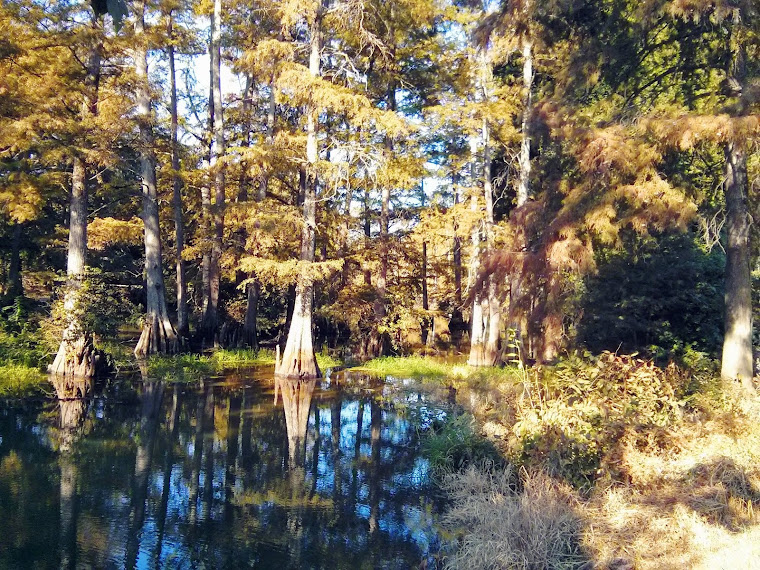
Bayou
Showing posts with label mississippi. Show all posts
Showing posts with label mississippi. Show all posts
Thursday, May 25, 2017

Tuesday, February 21, 2017
The Hardest Part
You are 21 years old and have just agreed to take a leap of faith and do this thing and teach. You know all too well just how little you know. You are going into this blind even if you are aware of your lack of sight.
At every point in this process, you are going to believe that this must be the hardest part. Passing the Praxis, surviving the first week of school, planning for three preps, balancing teaching and coaching and a life of your own, teaching 150 kids in the poorest corner of the poorest state in the country and finding something to love in each and every one of them. At every point in this process, you will be wrong. None of these tasks is the hardest part.
The hardest part starts the moment you agree to do this and will stay with you years after you leave teaching. It stares you in the mirror every morning when you wake and again at night before you lay your head down to sleep. Nearly two years in, you have not even begun to master it, though, you know it is the only thing that will allow you to survive in this job. Here is the hardest part, the skill no one tells you you must have in order to teach: Forgiveness. You must learn to forgive yourself.
Forgive yourself because you have no idea what to do. You will stumble through lessons on topics you are not quite qualified to teach. You will write a kid up when they don't deserve it and not write them up when they most certainly do. You will realize two days into a unit that you have taught an entire skill wrong. You will write tests that are too hard, too easy, and never quite find the right spot in between. Forgive yourself. You are doing the best that you know how to do.
Forgive yourself because you will make every mistake in the book and then write a few new pages of your own. For most of the first half of the first year, you are going to do more things wrong than you do right. You will regret words as soon as you have said them and more than that you will regret the words you do not say at all. Forgive yourself. You are doing the best that you know how to do.
Forgive yourself because even after you have learned how to do better and be the teacher your students deserve, you will not always be allowed to do it. You will be forced again and again to make decisions that you know are wrong for your students. You are working within a system that is stacked against you and your students. You will give test after test after test and know the whole time that it is wrong. You will postpone learning for the sake of "education" and again you will know that it is wrong. When you can you will fight it, but too often you cannot. Forgive yourself. You are doing the best that you know how to do.
Forgive yourself because your students are slipping through your fingers. You will always be running out of time in the class period, in the marking period, in the year. Your time will run out and you will wonder if they have learned anything at all. Forgive yourself. You are doing the best that you know how to do.
Forgive yourself because even if you are the perfect teacher it will not be enough. You will lose some of your students to all manner of misfortune, to jail, to the streets, to time. Rational expressions and binder grades and performance tasks will not stop a speeding bullet when it comes for one of your students. Forgive yourself. You are doing the best that you know how to do.
At every point in this process, you are going to believe that this must be the hardest part. Passing the Praxis, surviving the first week of school, planning for three preps, balancing teaching and coaching and a life of your own, teaching 150 kids in the poorest corner of the poorest state in the country and finding something to love in each and every one of them. At every point in this process, you will be wrong. None of these tasks is the hardest part.
The hardest part starts the moment you agree to do this and will stay with you years after you leave teaching. It stares you in the mirror every morning when you wake and again at night before you lay your head down to sleep. Nearly two years in, you have not even begun to master it, though, you know it is the only thing that will allow you to survive in this job. Here is the hardest part, the skill no one tells you you must have in order to teach: Forgiveness. You must learn to forgive yourself.
Forgive yourself because you have no idea what to do. You will stumble through lessons on topics you are not quite qualified to teach. You will write a kid up when they don't deserve it and not write them up when they most certainly do. You will realize two days into a unit that you have taught an entire skill wrong. You will write tests that are too hard, too easy, and never quite find the right spot in between. Forgive yourself. You are doing the best that you know how to do.
Forgive yourself because you will make every mistake in the book and then write a few new pages of your own. For most of the first half of the first year, you are going to do more things wrong than you do right. You will regret words as soon as you have said them and more than that you will regret the words you do not say at all. Forgive yourself. You are doing the best that you know how to do.
Forgive yourself because even after you have learned how to do better and be the teacher your students deserve, you will not always be allowed to do it. You will be forced again and again to make decisions that you know are wrong for your students. You are working within a system that is stacked against you and your students. You will give test after test after test and know the whole time that it is wrong. You will postpone learning for the sake of "education" and again you will know that it is wrong. When you can you will fight it, but too often you cannot. Forgive yourself. You are doing the best that you know how to do.
Forgive yourself because your students are slipping through your fingers. You will always be running out of time in the class period, in the marking period, in the year. Your time will run out and you will wonder if they have learned anything at all. Forgive yourself. You are doing the best that you know how to do.
Forgive yourself because even if you are the perfect teacher it will not be enough. You will lose some of your students to all manner of misfortune, to jail, to the streets, to time. Rational expressions and binder grades and performance tasks will not stop a speeding bullet when it comes for one of your students. Forgive yourself. You are doing the best that you know how to do.
Friday, August 5, 2016
Ready, Set, Go
"Are you ready for Monday?" they keep asking me.
"Ready" isn't really the word for it, I think. I don't have a roster. I know the subjects I'm teaching, but not the class periods I'm teaching them. I have three preps including the new-to-me algebra III and, to be honest, I'm not really all that sure what, exactly, algebra III is. My shelving units won't show up until Tuesday so everything in my classroom is shoved under a table and behind my desk. Yet, despite all of that, I feel oddly prepared.
Maybe it's just a false sense of confidence from surviving the storied First Year Teaching that will come crashing down at 7:30 on Monday morning, but I think it might be just a little bit real. I may not have all of the details figured out yet, but I do have way more figured out than I did at this time last year. I have unit plans for two of my classes and I know exactly what my students will be doing on the first day I get to see all of my classes. My long-term calendars have been constructed (except for algebra III) and I'm relatively confident that we'll get to cover all of the required topics despite the outlandish amount of testing.
It's more than just the details, though. In some bigger sense, I feel more prepared which I suppose I'm supposed to feel. I've learned a lot in the past year and most of what I learned will help me be a much better teacher this year than I was last year, but there's one lesson that stands out in particular. In fact, if I sat down and picked the single most important thing I learned during my inaugural classroom year, it would be this one: I love my students so much and at the end of the day that is enough. I want to be clear it is not enough to love your students and not teach them the content, but for me when it came down to it loving them was powerful enough to get me through everything else that happened.
There were so many times last year when I thought I couldn't go on and at each of those junctures I was surprised to learn that, when I remembered why and for whom I'm here, I could. At each of those points, I had to remind myself that whatever I found so bad in that moment had been keeping my students down for years. Yes, administrative changes suck when you're a teacher. They suck more when they define your education as a student. Yes, the amount of state testing is oppressive to teachers. It's more oppressive to students who have known nothing else. As a veteran teacher put it, I can pack up and leave at the end of the day. I can drive home at the end of the school day and drive back to Ohio at the end of the year, if I so choose. My students cannot. Leaving is a luxury and it is one my students so often do not have. Going to school every day is my job; for my students, it is their lives.
My students cannot leave and they deserve so much better than this and I love them enough to want to stay here for as long as I can to make it happen. It's this love that keeps me going on the hard days and even on the easy days. I was pretty overwhelmed yesterday with the amount of things that had to be done for the coming year and it left me feeling pretty zapped of energy. And then in walked my students. Some of the football players came by whom I taught last year and whom I will have the singular pleasure of teaching again this year. They were there to help teachers move classrooms and they were actually excited to see me! One of them walked in my room and said with his trademark grin, "Did you miss me?" Of course, I did. I missed all of them. And suddenly, the energy was back. I really have missed them and as physically and mentally unprepared as I may be for Monday, I am so, so ready to be back.
"Ready" isn't really the word for it, I think. I don't have a roster. I know the subjects I'm teaching, but not the class periods I'm teaching them. I have three preps including the new-to-me algebra III and, to be honest, I'm not really all that sure what, exactly, algebra III is. My shelving units won't show up until Tuesday so everything in my classroom is shoved under a table and behind my desk. Yet, despite all of that, I feel oddly prepared.
Maybe it's just a false sense of confidence from surviving the storied First Year Teaching that will come crashing down at 7:30 on Monday morning, but I think it might be just a little bit real. I may not have all of the details figured out yet, but I do have way more figured out than I did at this time last year. I have unit plans for two of my classes and I know exactly what my students will be doing on the first day I get to see all of my classes. My long-term calendars have been constructed (except for algebra III) and I'm relatively confident that we'll get to cover all of the required topics despite the outlandish amount of testing.
It's more than just the details, though. In some bigger sense, I feel more prepared which I suppose I'm supposed to feel. I've learned a lot in the past year and most of what I learned will help me be a much better teacher this year than I was last year, but there's one lesson that stands out in particular. In fact, if I sat down and picked the single most important thing I learned during my inaugural classroom year, it would be this one: I love my students so much and at the end of the day that is enough. I want to be clear it is not enough to love your students and not teach them the content, but for me when it came down to it loving them was powerful enough to get me through everything else that happened.
There were so many times last year when I thought I couldn't go on and at each of those junctures I was surprised to learn that, when I remembered why and for whom I'm here, I could. At each of those points, I had to remind myself that whatever I found so bad in that moment had been keeping my students down for years. Yes, administrative changes suck when you're a teacher. They suck more when they define your education as a student. Yes, the amount of state testing is oppressive to teachers. It's more oppressive to students who have known nothing else. As a veteran teacher put it, I can pack up and leave at the end of the day. I can drive home at the end of the school day and drive back to Ohio at the end of the year, if I so choose. My students cannot. Leaving is a luxury and it is one my students so often do not have. Going to school every day is my job; for my students, it is their lives.
My students cannot leave and they deserve so much better than this and I love them enough to want to stay here for as long as I can to make it happen. It's this love that keeps me going on the hard days and even on the easy days. I was pretty overwhelmed yesterday with the amount of things that had to be done for the coming year and it left me feeling pretty zapped of energy. And then in walked my students. Some of the football players came by whom I taught last year and whom I will have the singular pleasure of teaching again this year. They were there to help teachers move classrooms and they were actually excited to see me! One of them walked in my room and said with his trademark grin, "Did you miss me?" Of course, I did. I missed all of them. And suddenly, the energy was back. I really have missed them and as physically and mentally unprepared as I may be for Monday, I am so, so ready to be back.
Sunday, January 10, 2016
Teach Them Math
My roommate and I have a saying we call "going down the rabbit hole." For the most part, it refers to obsessive Googling of an often random subject that occasionally leads to momentarily increased anxiety over something inane and usually entirely out of our control. For me, on Saturday night, it was chronic traumatic encephalopathy. That's right. On a Saturday night in my prime years, I was sitting at the kitchen table reading as much as I could about brain damage caused by repeated blows to the head, usually found in professional football players.
That morning I had gone to see the new Will Smith movie "Concussion" about the doctor who discovered chronic traumatic encephalopathy and the NFL's reaction to the news. But, to be honest, the subject had been weighing on my mind since long before the movies. You see, I teach high school and some of my students play football and some of those athletes get injured and some of those injuries are head injuries. The first time you go to your school's Friday night game and your students get excited to see you there, it's fun and exciting; the first time you see one of your students get knocked down and not get back up right away, it's not.
So on Saturday night the thoughts of "Concussion" and of my football players sent me down the rabbit hole. In the midst of my reading on Mike Webster and Bennet Omalu and Roger Goodell, I would sometimes stop to pop out from behind my computer screen and tell my roommate some horrifying story about an NFL player who had tragically died after a career full of hard hits to the head or to worry aloud about my students. Finally, I said "This stuff scares me and I don't even know what to do about it. I know it's only high school football, but I'm worried about my babies. What am I supposed to do?"
"Teach them math," my roommate replied. And that't just it, isn't it? It's one of the hardest and most important lessons for teachers to learn, especially teachers in high poverty areas like the one I teach in. My students are facing a lot and it's hard not to worry about them, but at the end of the day all I can really do is my job. Everything else is out of my control, but for the 58 minutes they're in my classroom every day there are three things I can do to help them: Love them, support them, and teach them math. If I do that, I've done my job and if I want to keep doing my job and doing it well for years to come I have to be able to do that and then come home and let go at the end of the day.
There are some things in life and in teaching that you can't control and as easy as it is to say that and believe that, it's another thing to live it. It's a skill I'm still learning and one I'll probably be learning for a long time, but it's a skill that I have to grasp. There really isn't much I can do to keep my students safe and happy and secure on the football field or at home or on the bus or wherever else they may go outside of school hours, but, this semester, when I worry about those hours that they aren't with me and what I can do about it, I'm going to commit more often to do just what I'm supposed to do and teach them math.
That morning I had gone to see the new Will Smith movie "Concussion" about the doctor who discovered chronic traumatic encephalopathy and the NFL's reaction to the news. But, to be honest, the subject had been weighing on my mind since long before the movies. You see, I teach high school and some of my students play football and some of those athletes get injured and some of those injuries are head injuries. The first time you go to your school's Friday night game and your students get excited to see you there, it's fun and exciting; the first time you see one of your students get knocked down and not get back up right away, it's not.
So on Saturday night the thoughts of "Concussion" and of my football players sent me down the rabbit hole. In the midst of my reading on Mike Webster and Bennet Omalu and Roger Goodell, I would sometimes stop to pop out from behind my computer screen and tell my roommate some horrifying story about an NFL player who had tragically died after a career full of hard hits to the head or to worry aloud about my students. Finally, I said "This stuff scares me and I don't even know what to do about it. I know it's only high school football, but I'm worried about my babies. What am I supposed to do?"
"Teach them math," my roommate replied. And that't just it, isn't it? It's one of the hardest and most important lessons for teachers to learn, especially teachers in high poverty areas like the one I teach in. My students are facing a lot and it's hard not to worry about them, but at the end of the day all I can really do is my job. Everything else is out of my control, but for the 58 minutes they're in my classroom every day there are three things I can do to help them: Love them, support them, and teach them math. If I do that, I've done my job and if I want to keep doing my job and doing it well for years to come I have to be able to do that and then come home and let go at the end of the day.
There are some things in life and in teaching that you can't control and as easy as it is to say that and believe that, it's another thing to live it. It's a skill I'm still learning and one I'll probably be learning for a long time, but it's a skill that I have to grasp. There really isn't much I can do to keep my students safe and happy and secure on the football field or at home or on the bus or wherever else they may go outside of school hours, but, this semester, when I worry about those hours that they aren't with me and what I can do about it, I'm going to commit more often to do just what I'm supposed to do and teach them math.
Friday, November 27, 2015
Coming Home: 2 Americas and 27 Types of Hummus
There are 27 varieties of hummus at the local grocery store in my neighborhood in Cincinnati. Strictly speaking, it's not the local grocery store; it's one of three all on the same block. Staring at the 27 varieties of hummus tonight, the same string of thoughts and questions snake into my mind as have several times this week: Why does anyone need this many kinds of hummus? Why does anyone need this many varieties of anything? Do these people know what luxury this is? Do they know that people in their own country go without all of this? Without 27 varieties of hummus, without three groceries stores in town, without all the jobs the stores provide, without the fresh produce they sell? Six months ago, did I know?
I've been visiting home this week for Thanksgiving and it's the first time I've returned since leaving Ohio in late May. In my time in the Delta, I've been to Memphis and Jackson for a day here and there, but I haven't spent any extended time out of the Delta since leaving home. This week has been my first long exposure to the way things are outside of my bubble, and it's been a complicated week.
When volunteers and missionaries return from developing countries, they often report feelings of isolation and a sense of being overwhelmed by this place they used to call home. My experience is obviously very different from someone who has spent an extended time in a completely foreign country and culture, but that confusing lack of belonging in the most familiar setting has become one I understand. It's hard not to be overwhelmed and a little put off by the fact that there are more businesses in the Philadelphia Airport than there are in the town I teach in. Driving down a main road in a wealthier suburb north of Cincinnati, the inequity becomes staggering as I wonder aloud to my mother why anyone could need so many restaurants on one street. It doesn't seem right that such abundance should exist in the same nation where some of my students live in homes without running water. Starbucks tastes different from what it did last year. It turns out that knowing the statistics on poverty and inequity does not affect the taste of coffee the way that six months of living and teaching among it does.
In between the errands, there is time for family and friends. This time is sometimes refreshing and sometimes not. Sometimes it is an inquisition of well-meaning relatives demanding answers to repeated questions and often desiring a neatly-packaged, one-sentence explanation of exactly what makes my job so difficult (It's not the kids. Stop asking me if it's the kids). Other times it is the truly wonderful people whom I can speak honestly with either because they have been somewhere like where I am now and truly understand or because they are people who truly know me and my aversion to repeated lines of questioning and will simply listen without judgment to whatever it is I want to share in that moment. No matter whom I speak to I work to strike the right balance between speaking the harsh and uncomfortable truth about the place where I teach and working to change the outsider's narrative and perception of Mississippi and it's people.
At other times I rest and work to get ahead to make the three weeks between me and Christmas go a little more smoothly. The week goes by fast. I haven't yet had time to reconcile these 2 separate Americas, this one with it's 27 versions of hummus and the one I will return to where the black kids and the white kids go to separate schools. A week isn't a long enough time to do that, I suppose. No length of time really is.
I've been visiting home this week for Thanksgiving and it's the first time I've returned since leaving Ohio in late May. In my time in the Delta, I've been to Memphis and Jackson for a day here and there, but I haven't spent any extended time out of the Delta since leaving home. This week has been my first long exposure to the way things are outside of my bubble, and it's been a complicated week.
When volunteers and missionaries return from developing countries, they often report feelings of isolation and a sense of being overwhelmed by this place they used to call home. My experience is obviously very different from someone who has spent an extended time in a completely foreign country and culture, but that confusing lack of belonging in the most familiar setting has become one I understand. It's hard not to be overwhelmed and a little put off by the fact that there are more businesses in the Philadelphia Airport than there are in the town I teach in. Driving down a main road in a wealthier suburb north of Cincinnati, the inequity becomes staggering as I wonder aloud to my mother why anyone could need so many restaurants on one street. It doesn't seem right that such abundance should exist in the same nation where some of my students live in homes without running water. Starbucks tastes different from what it did last year. It turns out that knowing the statistics on poverty and inequity does not affect the taste of coffee the way that six months of living and teaching among it does.
In between the errands, there is time for family and friends. This time is sometimes refreshing and sometimes not. Sometimes it is an inquisition of well-meaning relatives demanding answers to repeated questions and often desiring a neatly-packaged, one-sentence explanation of exactly what makes my job so difficult (It's not the kids. Stop asking me if it's the kids). Other times it is the truly wonderful people whom I can speak honestly with either because they have been somewhere like where I am now and truly understand or because they are people who truly know me and my aversion to repeated lines of questioning and will simply listen without judgment to whatever it is I want to share in that moment. No matter whom I speak to I work to strike the right balance between speaking the harsh and uncomfortable truth about the place where I teach and working to change the outsider's narrative and perception of Mississippi and it's people.
At other times I rest and work to get ahead to make the three weeks between me and Christmas go a little more smoothly. The week goes by fast. I haven't yet had time to reconcile these 2 separate Americas, this one with it's 27 versions of hummus and the one I will return to where the black kids and the white kids go to separate schools. A week isn't a long enough time to do that, I suppose. No length of time really is.
Saturday, October 10, 2015
Delta Love: You Are Not An Island
Fall, I think, is a time for gratitude. Thanksgiving looms and quiet, cool weekends lend themselves to time for reflection. The changing seasons make the quick passage of time more obvious and it is impossible not to take some time to ruminate on life.
My first fall in Mississippi has made me thankful for the monarch butterflies that are flying south for winter. I am grateful for the cool breezes and the storms that sweep across the Delta bringing rain and respite from the still persistent heat. I am also thankful for the arrival of fall break this week, signaling the end of the first nine weeks. By some small miracle I've made through a quarter of the year, though not without many bumps in the road.
More than anything this fall, I am thankful for the support I've received, especially the support from other teachers. New teachers receive a lot of advice from everyone: Don't smile until Christmas. Don't cry in front of your students. Have high expectations. Go home early at least one day a week. That's all great, but the piece of advice I think is most important for new teachers is this: Reach out. Make friends. Remember that you are not alone.
The job of a teacher is hard and it can feel isolating. For large portions of the day you are alone in your room with 20 or more students. At times you will inevitably feel alone in your struggle, but you are not an island and there are people all around you who will help you through this journey.
For me, one of the most meaningful support systems I've had is the other teachers at my school and a rough last week of the grading period has left me feeling especially grateful for them. I can say with 100% confidence that I would not have made it through the year so far without them. Countless times the special education teacher who works with the math department has advised and counseled me so many times and has been endlessly patient as I fumble through my first year and try to get get a grip. More than once he has coached me through a crisis of confidence and I could not be more grateful for his presence in my classroom and his patience and generosity. The department head always has my back and is constantly helping me out, sharing lesson plans and answering my innumerable questions. The teacher next door is always looking out for me, reminding me when I most need it that I'm doing a good job, all things considered. There is a history teacher who regularly takes new teachers under her wing and will stop at nothing to help us out. She's helped me plan lessons at the last minute and rearrange my classroom to make it more conducive to learning, but more than that she's just been kind. So often it is talking and laughing with her at the end of a particularly hard day that makes me feel human again.
It doesn't stop with the veteran teachers, though. I am just as grateful for the new and relatively new teachers as I am for those who have been in the trenches for a little while longer. After all, it's these teachers who best know what you're going through since they're right there with you. I am so grateful for the new teachers at my school who I've been on this crazy ride with. It's these teachers who I've compared notes with and commiserated with. We celebrate victories together and laugh at the craziness of all of it. It is their classrooms I escape to in the morning when I need a quiet moment or during my planning period when I need a pep talk. It's also their classrooms I return to at the end of the day to cry or laugh when I need to. I can only hope that I have managed to be there for them in the way they have been there for me.
New teachers have all sorts of voices trying to offer advice and support. There will be mentors and coaches and consultants, but at the end of the day the best support is usually right next door or across the hallway. I often tell my students that in our classroom we are a team and your team is your family. I am grateful this fall to not only have such a special student team, but also a wonderful teacher team. I may be 600 miles away from my real family, but if team means family then my teacher team is the best Mississippi family I could ask for.
My first fall in Mississippi has made me thankful for the monarch butterflies that are flying south for winter. I am grateful for the cool breezes and the storms that sweep across the Delta bringing rain and respite from the still persistent heat. I am also thankful for the arrival of fall break this week, signaling the end of the first nine weeks. By some small miracle I've made through a quarter of the year, though not without many bumps in the road.
More than anything this fall, I am thankful for the support I've received, especially the support from other teachers. New teachers receive a lot of advice from everyone: Don't smile until Christmas. Don't cry in front of your students. Have high expectations. Go home early at least one day a week. That's all great, but the piece of advice I think is most important for new teachers is this: Reach out. Make friends. Remember that you are not alone.
The job of a teacher is hard and it can feel isolating. For large portions of the day you are alone in your room with 20 or more students. At times you will inevitably feel alone in your struggle, but you are not an island and there are people all around you who will help you through this journey.
For me, one of the most meaningful support systems I've had is the other teachers at my school and a rough last week of the grading period has left me feeling especially grateful for them. I can say with 100% confidence that I would not have made it through the year so far without them. Countless times the special education teacher who works with the math department has advised and counseled me so many times and has been endlessly patient as I fumble through my first year and try to get get a grip. More than once he has coached me through a crisis of confidence and I could not be more grateful for his presence in my classroom and his patience and generosity. The department head always has my back and is constantly helping me out, sharing lesson plans and answering my innumerable questions. The teacher next door is always looking out for me, reminding me when I most need it that I'm doing a good job, all things considered. There is a history teacher who regularly takes new teachers under her wing and will stop at nothing to help us out. She's helped me plan lessons at the last minute and rearrange my classroom to make it more conducive to learning, but more than that she's just been kind. So often it is talking and laughing with her at the end of a particularly hard day that makes me feel human again.
It doesn't stop with the veteran teachers, though. I am just as grateful for the new and relatively new teachers as I am for those who have been in the trenches for a little while longer. After all, it's these teachers who best know what you're going through since they're right there with you. I am so grateful for the new teachers at my school who I've been on this crazy ride with. It's these teachers who I've compared notes with and commiserated with. We celebrate victories together and laugh at the craziness of all of it. It is their classrooms I escape to in the morning when I need a quiet moment or during my planning period when I need a pep talk. It's also their classrooms I return to at the end of the day to cry or laugh when I need to. I can only hope that I have managed to be there for them in the way they have been there for me.
New teachers have all sorts of voices trying to offer advice and support. There will be mentors and coaches and consultants, but at the end of the day the best support is usually right next door or across the hallway. I often tell my students that in our classroom we are a team and your team is your family. I am grateful this fall to not only have such a special student team, but also a wonderful teacher team. I may be 600 miles away from my real family, but if team means family then my teacher team is the best Mississippi family I could ask for.
Saturday, June 27, 2015
On Calculators and the Education Gap
Sometimes it's the little things that let you know just how big the problem is. For me, it's calculators.
This week in my algebra 1 class I've been teaching sequences and exponential functions. In non-math speak, that means we've been talking about calculating things that require multiplying a number by itself over and over and over again. In the real world, exponential functions are all around us. They allow us to calculate interest on financial investments and depreciation on cars as well as growth rates for elephant populations. In many ways, the financial and biological worlds operate in exponentials. They're a foundational skill of algebra and essential to how the world around us works. They're also pretty damn tedious to calculate on paper or with a four function calculator.
Unfortunately, paper and four function calculators are what my class has. Room 10 is currently in possession of exactly five calculators purchased from Walmart for 50 cents each, which I can borrow from the office on days when other teachers haven't gotten there first. These calculators add, subtract, multiply, and divide and when the battery runs out we just throw them away; a new battery costs more than a new calculator. Four functions can get you pretty far, but these calculators fall a bit short when you're asking students to calculate 1.1^8. When you have to type 1.1 x 1.1 x 1.1 x 1.1 x 1.1 x 1.1 x 1.1 x 1.1 = into a calculator, it takes a lot of time and leaves a lot of room for human error. So for the most part, my co-teacher and I are limited to giving our students pretty simple problems. On days we don't have calculators, it often means not using decimals in examples or practice problems. Even on the days we do have calculators, it might mean calculating the value of a bank account in the 5th year of receiving interest instead of the 16th year.
In contrast to my students and their 50 cent calculators, I got my first scientific calculator in the 9th grade. It had an exponent function and all of the trig functions and could convert between degrees and radians. It cost about $30 and it was an expectation that all students have their own calculator for school. By 10th grade, we were required to upgrade to an $80 graphing calculator. And, honestly, I never thought anything of it. Every day I learned how to do new things on my calculator and took it home at night to use for my homework. By the time my ACT, SAT, and AP tests rolled around, I was a master of my TI-83 and could fly through problems requiring complex arithmetic calculations.
Students in the Delta don't have that luxury. It would be ludicrous to expect parents in some of the poorest counties in the nation to provide a $30 calculator one year and an $80 one the next. Instead, most schools have a class set. It might not include enough calculators for every student to use one during class and some might be broken and almost certainly students will not be able to take these calculators home to use for homework at night. Some schools let students borrow these calculators for college admissions tests and some do not. On a day to day basis, not having a calculator might not seem like that big of a deal, but when you are taking your ACT on a Saturday morning with a calculator you've barely ever practiced with next to a kid from the private school down the road who is keying in numbers to his familiar, personal calculator, suddenly that calculator becomes a much bigger deal.
Maybe in the state with the lowest educational attainment in the country, the highest infant mortality rate, and the lowest educational attainment, calculators aren't really the problem. Maybe standing in poorest state in the Union and worrying about calculators is just me missing the forest for the trees. But perhaps not.
You see, for me, calculators, more than any one thing, have come to represent the gaping space between the educational opportunities I received and the educational opportunities my students will receive. They represent the little everyday challenges that distract you from the bigger ones, the molehills that make you forget the mountain. If poverty means not worrying about who to vote for because you're too worried about where dinner is coming from, then educational inequity means not worrying about how you'll pay for college because you're too worried about taking the ACT without a calculator.
I wish I could tell you that I've found a clever workaround for this problem in my classroom, but I haven't. I just write examples that don't look like the ones that show up on tests and count on my students, who can multiply 81 by 3 in their heads way faster than I can. At the end of the day, my students are the people who will face the biggest challenges from both a lack of calculators and a lack of educational opportunities, but I'm convinced that those students will also be exactly the people who figure out how to fix those problems for the students that come after them. I can't wait to see them do it.
This week in my algebra 1 class I've been teaching sequences and exponential functions. In non-math speak, that means we've been talking about calculating things that require multiplying a number by itself over and over and over again. In the real world, exponential functions are all around us. They allow us to calculate interest on financial investments and depreciation on cars as well as growth rates for elephant populations. In many ways, the financial and biological worlds operate in exponentials. They're a foundational skill of algebra and essential to how the world around us works. They're also pretty damn tedious to calculate on paper or with a four function calculator.
Unfortunately, paper and four function calculators are what my class has. Room 10 is currently in possession of exactly five calculators purchased from Walmart for 50 cents each, which I can borrow from the office on days when other teachers haven't gotten there first. These calculators add, subtract, multiply, and divide and when the battery runs out we just throw them away; a new battery costs more than a new calculator. Four functions can get you pretty far, but these calculators fall a bit short when you're asking students to calculate 1.1^8. When you have to type 1.1 x 1.1 x 1.1 x 1.1 x 1.1 x 1.1 x 1.1 x 1.1 = into a calculator, it takes a lot of time and leaves a lot of room for human error. So for the most part, my co-teacher and I are limited to giving our students pretty simple problems. On days we don't have calculators, it often means not using decimals in examples or practice problems. Even on the days we do have calculators, it might mean calculating the value of a bank account in the 5th year of receiving interest instead of the 16th year.
In contrast to my students and their 50 cent calculators, I got my first scientific calculator in the 9th grade. It had an exponent function and all of the trig functions and could convert between degrees and radians. It cost about $30 and it was an expectation that all students have their own calculator for school. By 10th grade, we were required to upgrade to an $80 graphing calculator. And, honestly, I never thought anything of it. Every day I learned how to do new things on my calculator and took it home at night to use for my homework. By the time my ACT, SAT, and AP tests rolled around, I was a master of my TI-83 and could fly through problems requiring complex arithmetic calculations.
Students in the Delta don't have that luxury. It would be ludicrous to expect parents in some of the poorest counties in the nation to provide a $30 calculator one year and an $80 one the next. Instead, most schools have a class set. It might not include enough calculators for every student to use one during class and some might be broken and almost certainly students will not be able to take these calculators home to use for homework at night. Some schools let students borrow these calculators for college admissions tests and some do not. On a day to day basis, not having a calculator might not seem like that big of a deal, but when you are taking your ACT on a Saturday morning with a calculator you've barely ever practiced with next to a kid from the private school down the road who is keying in numbers to his familiar, personal calculator, suddenly that calculator becomes a much bigger deal.
Maybe in the state with the lowest educational attainment in the country, the highest infant mortality rate, and the lowest educational attainment, calculators aren't really the problem. Maybe standing in poorest state in the Union and worrying about calculators is just me missing the forest for the trees. But perhaps not.
You see, for me, calculators, more than any one thing, have come to represent the gaping space between the educational opportunities I received and the educational opportunities my students will receive. They represent the little everyday challenges that distract you from the bigger ones, the molehills that make you forget the mountain. If poverty means not worrying about who to vote for because you're too worried about where dinner is coming from, then educational inequity means not worrying about how you'll pay for college because you're too worried about taking the ACT without a calculator.
I wish I could tell you that I've found a clever workaround for this problem in my classroom, but I haven't. I just write examples that don't look like the ones that show up on tests and count on my students, who can multiply 81 by 3 in their heads way faster than I can. At the end of the day, my students are the people who will face the biggest challenges from both a lack of calculators and a lack of educational opportunities, but I'm convinced that those students will also be exactly the people who figure out how to fix those problems for the students that come after them. I can't wait to see them do it.
Monday, March 30, 2015
Welcome to the South, Y'all: My First Trip to Mississippi
 |
| A sign in a highway rest stop. |
“There’s so much nothing. It’s just nothing everywhere. I’ve
never seen so much nothing in my life,” I kept repeating emphatically to my
parents as we drove into the Mississippi Delta on our first trip to visit the
state that will in two months be my home.
We had arrived in Mississippi in mid-February for a race. I
had been offered the opportunity to come help out at the Mississippi River Marathon, which benefits Teach for America. I was visiting over Valentine’s Day
weekend and would have the change to get to know the state and it’s people a
little bit while I was there, including meeting community members and current
corps members and taking some time to visit some classrooms. When the chance
was presented to me back in December I jumped on it and immediately set about
the surprisingly easy task of getting my parents on board for the ten-hour car
ride.
When we set out early on a Thursday morning, I was eager to
see a new part of the country and to learn a little bit more about my new home,
but I was nonetheless nervous. When I made my commitment to teach in
Mississippi I knew I was going to end up feeling like a stranger in a strange
land, and I feared that visiting the state for the first time would exacerbate
my nerves about the coming foreignness.
The ride was long and mostly boring. Because I live in the
very southwest corner of Ohio, there were really only three states to drive
through on our trip: Kentucky, Tennessee, and Mississippi. Having driven
through Kentucky and Tennessee many times before, I would have to wait for the
prospect of a new landscape to observe until we had ventured all the way
through the familiar foothills of the mid-South. Fortunately, with me and both
my parents driving, the long trip was a little less taxing and no one openly
objected to listening to Taylor Swift’s “1989” on repeat during my three hour
driving shift.
The first thing worth noting when we reached Mississippi was
the welcome center. As a family of mildly versed travelers, my parents and I
had seen many-a-welcome-center, but Mississippi’s was the first that offered
free coffee to weary road-trippers. As my parents perused travel brochures
about the many Civil War sites and sleepy towns that they could visit, I paced
around nervously, suddenly very aware of how much my life was going to change
in four months.
As we entered the Delta it was hard not to notice just how
flat everything was. Growing up in the Midwest, I thought I knew what flat
looked like. After all, I had been subjected to the torturous drive through
Indiana on multiple occasions, but the truth is Indiana ain’t got nothing on
the Mississippi Delta. The Delta is as flat as a piece of paper and it left me
feeling oddly exposed. For miles around us all I could see was empty fields
interrupted occasionally by the odd clump of trees or a lone building.
In addition to the disconcerting emptiness, it was also hard
not to notice the many vivid colors. We were driving in at sunset and I have to
say I had never before seen a sunset quite like a Delta sunset. Because the
land is so flat, the sky swallows everything and every color you’ve ever
associated with a sunset surrounds you fully. Drinking in the colors of my
first Delta sunset, I clung to the notion that maybe this masterpiece in the
sky was a sign that I would find good things among the foreign scenery.
When we finally arrived in Indianola, where we were to meet
some corps members for dinner, it came to my attention that I had no dress
shoes to wear to visit schools the next day. Since we had a half an hour to
spare before dinner, we found a store and, standing in the shoe aisle, I
jokingly remarked to my mom that I always knew that one day I would end up
frantically searching for dress shoes in a crowded Walmart in the middle of
nowhere and she replied that she wasn’t sure where she’d gone wrong in raising
a daughter who wouldn’t double check that she’d packed appropriate footwear.
After the unfortunate shoe mishap, things started to look
up. Over the course of the next two days I was able to talk with current corps
members who provided practical advice (Invest heavily in bug spray) and another
future corps member from Alabama who shared a little bit about life in the
South (No, not all Southerners like to eat in restaurants in gas stations;
that’s a Mississippi thing) and community members who graciously welcomed me
and my family to their home for dinner (And, in one meal, demonstrated the
absolute culinary superiority of the South).
I was also assaulted by kindness from strangers. People
would say hello and ask how I was doing even though I had never met them
before. Everywhere I went strangers had something nice to say. One day I
chatted with a waiter in a Mexican restaurant about making the move out from
the big city and the next I spoke at length with a man who was in the middle of
running a marathon in every one of the fifty states. It quickly became evident
to me that Southern hospitality and friendliness is no myth and every one of
those conversations eased my fears about the coming transition.
On the way back home, my parents asked me if I thought the
trip had been worth it. I responded that it had been. I was so much less scared
of what lay in front of me after my two days in Mississippi. Perhaps I had only
seen a fraction of the state and of the story, but after being barraged at home
by negative stereotypes of the Deep South, it was comforting to learn that the
reality just wasn’t that simple. My dad agreed with this assessment, saying
that before he had visited he had a pretty negative image of Mississippi,
constructed from history, current events, and Hollywood portrayals of the
state, but after our visit his understanding shifted.
Looking back a month and a half later, I like to think I was
right about the sunset being a sign. The kindness and hospitality I saw in
Mississippi assuaged my anxieties significantly, though, to be sure, they still
linger. I understand that the reality of Mississippi is likely neither the
frightening stereotype I had previously imagined or the narrow slice I saw in
my brief visit. Likely, it is a mixture of both and, just like the people of
the state the statistics are complex. Mississippi may have the lowest per
capita income in the country, but they rank second highest in per capita
charitable giving. I suspect that my
experience will reflect the realities and complexities of this fact and, while
I may find myself surrounded by poverty and destitution, I will also find
myself surrounded by compassion and community, the vivid colors amongst that
flat, flat landscape.
Monday, March 9, 2015
How Did I End Up Here?
More than one year ago, as a junior at Ohio
State, I began my application for Teach for America's 2015 teacher corps. As a
political science major, teaching wasn't necessarily what I had always imagined
doing. With a forecasted graduation in spring 2015, I had previously imagined
that I would launch my career as a low-level staffer on a presidential campaign
for the 2016 election. There were a lot of exciting names being tossed around
as potential candidates for the 2016 cycle and, more exciting for me, it seemed
like this might be the best chance America had seen to elect a woman. Yet
somehow even with my excitement at the prospect of being part of a
ground-breaking campaign, I lacked a degree of certainty. There was still
something pulling me away from this path.
That was when I received an email from a campus
recruiter for TFA. The early admission deadline was fast approaching. TFA had
always been in my periphery as a post-graduate option. I knew that one day I
wanted to go into policy work or politics, and I knew that education was the
most important issue to me. What ultimately influenced my decision to apply,
however, was the time I had spent during high school observing my mother's
journey as a special education teacher. Through her eyes it became clear to me
that legislators making laws about teaching without setting foot in front of a
blackboard would always be a part of the problem more than they would be part
of the solution. I knew then that I didn't want to be one of
those legislators and the best way to avoid that outcome was to teach, to
figure out for myself how government and society can better support teachers
AND students instead of a viewing them as opposing forces. So I took a leap of
faith and applied to teach.
The application process was a long one, but the
advantage for me was that the time and energy demanded of me during this
process helped me to realize how much I wanted to this. As a friend put it, he
hadn't been sold on me as a teacher until he saw how much passion I was
approaching this application with. That passion convinced me, too. By the time
May rolled around and I was notified of my admission, I knew that applying had
been the right choice.
Then, a bombshell was dropped. I had ranked
TFA's regional placements as soon as I was informed of my admission, but it
wasn't until a week or two later that I received my official regional
placement, something that was more or less immutable. I had agreed to go almost
anywhere that I was needed when I ranked my regions, with one or two exceptions
based on budget, but in my ranking I had placed a priority on the kind of
environment and distance to family with regions in California, Texas, and the
Midwest ranking near the top of my list. I was eagerly awaiting a placement
decision and crossing my fingers for my first choice of Sacramento when I
logged onto to the TFA admission portal to find the biggest shock of my life
waiting for me: Mississippi.
That's right. Mississippi. Tree hugging, city
girl heads to the heart of the Deep South. It sounded like a cheesy coming of
age story, or worse, a horror movie. For a brief period, I let fear get the
best of me and thought about pursuing another option. After all, Mississippi
wasn't even close to any family and it just wasn't what I had pictured, but I
did some research and it turned out Mississippi had a lot to offer (I'll get to
that in a future post). Ultimately, what assuaged my doubts was something a TFA
recruiter had said at some point during the process that has stuck with me ever
since: "Remember, it's not Teach for San Francisco or Teach for Chicago or
Teach for Delaware; it's Teach for America." I knew she was right so if
Mississippi needed me then it was to Mississippi I would go.
But Mississippi wasn't the last curveball to
come my way. The next would arrive in November just before I was asked to make
an official commitment to teach for two years. It was time for my subject
placement. Going into the process, I was anticipating a placement in the
humanities. Surely, a person with political science would be teaching social
studies or English, maybe even Spanish so naturally I was a little surprised
when I once again logged onto the TFA admission portal to see the words
"high school mathematics" waiting for me. How did that happen? Well,
the best I can guess is this: I'm a political science major, but on the road to
that major I've also majored in, at one point or another, biology, journalism,
computer science and engineering, and physics. What I really wanted to do in
college was learn a little bit about everything, but, as it turns out,
"Bachelor of Science in Everything" is not a degree you can get at
Ohio State so I ended up with my first love: politics. However, on the long and
meandering path to a degree in political science I had completed a good amount
of math classes and by "good" I mean a handful more than the average
social sciences major. That meant I was more qualified to teach math than a lot
of TFA's applicants and the need for math teachers, I'm sure you've heard, is
astronomically high. For an hour or two, my commitment to this idea of teaching
again began to waver, but I woke up the next morning and just knew that this
was still right. I was still meant to be teaching even if it was the last
subject I expected in the last place I expected.
Over the next few months I would make my
commitment official and begin the challenging work of dusting off my
mathematical knowledge in order to pass the Praxis, the required certification
exam for teachers in Mississippi. I took the test in January and am happy to
report that, by some sort of miracle, I passed. Now, in addition to preparing
to teach math, I'm also preparing for the move to such a foreign place. That
transition is part of what I hope to document here and I hope you'll enjoy the
journey with me.
Subscribe to:
Posts (Atom)