It's harvest season in the Delta and with harvest season comes fire. Farmers light fire to fields in controlled burns to clear crop residue and kill weeds before the next planting season rolls around. The fires help nourish the soils and allow for a fresh and healthy start in spring.
The first time I saw a field fire, I found it quite odd. Growing up in a suburban area, smoke was never a good sign, but I've quickly come to realize that down here smoke and fire are just another element of life in the Mississippi Delta (and possibly one reason that the Delta is home to so many asthmatics). Over the last week or so I've probably seen 3 or 4 fires burning everyday along the rural highway as I drive home from work.
Today, driving to the neighboring town, I drove through a cloud of smoke from a fire burning especially close to the road and started to think of my classroom. This week it felt like everything in my classroom and the fields that surround it was on fire.
For the last three weeks, my students have talked while I was talking and played around while they were supposed to be working. What's more, they haven't learned the content they were supposed to have learned by now and that's mostly on me. Everyday I struggle with the feeling that I am running out of resources: Out of paper, out of ink, out of money, out of patience, out of time. Everyday I struggle.
I keep waiting for it to get better, for the day I magically show up and my students respect me and listen intently as I speak and grasp the material that I put in front of them, but that day's not coming unless I do something to bring it about. The truth is my students don't pay attention and struggle with the material mostly because of me. To say my students hold no responsibility for their behavior and their grades would be a lie, but it would be just as facetious to say that I am innocent in all of this. I can do so much better and sometimes I find that I am most upset not because of anything my students do but because of all of the things I know I am failing to do. I know that my classes aren't engaging enough and that I don't scaffold assessments enough so when my students fail quizzes I'm not upset with them for failing at a quiz, I'm upset with myself for failing my students.
To say that I know I'm not doing good enough would be an understatement. I know exactly how much better I need to be, but fortunately I also know that I can be better and I've committed to a plan to ensure it. I'm ditching the lecture-practice problems format for something more challenging and fun for my students. On Thursday, I gave my last lecture and tomorrow I'm going in with a new mindset and a new game plan. We're going to use math centers and project based learning and all sorts of exciting and engaging instructional strategies. Yesterday I wrote my first set of lesson plans based on my new model and for the first time I was excited as I wrote lesson plans. It's the dawn of a new week and I'm so ready for it.
The fires have burned in my classroom for almost a month now and it's time to put them out. The fields of my classroom will be left rich with all the things learned from the fires of past mistakes. Tomorrow is a new day. The fires will end and planting season will arrive.
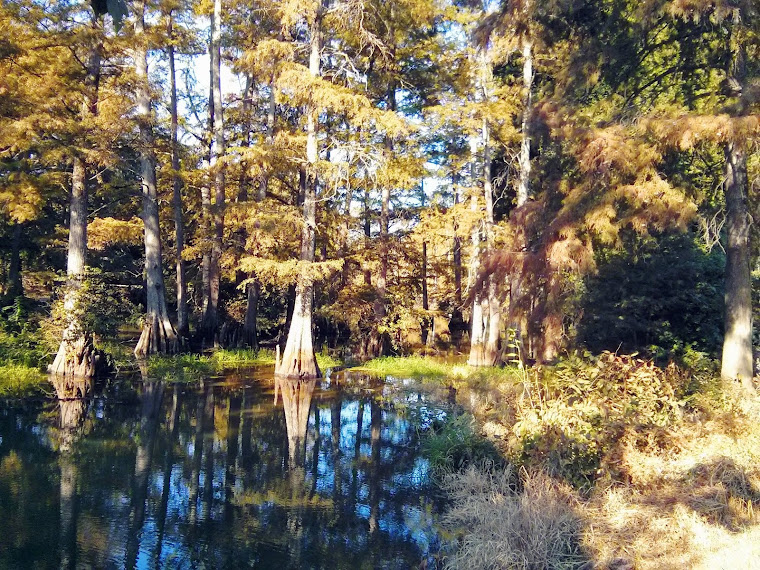
Bayou
Sunday, August 30, 2015

Saturday, August 22, 2015
121 Reasons to Come Back
My second full week of teaching has shown me quite quickly that almost nothing about this job is easy. If you are looking for a job that is easy, then turn fast and run in the opposite direction of teaching.
Lesson planning is certainly not easy. Attempting to make geometry engaging to high schoolers is probably the hardest thing I've ever done and most of the time I fail (I can tell by the way their eyes glaze over when I start to talk.)
Helping all of the students who need assistance during independent practice is not easy. There are 22 of them and only 1 of me and, despite my best efforts, I have not yet mastered the ability to be in two places at once (I keep trying, though. If there were one skill that could improve my quality of life, this would be it.)
Deciding whether to buy more pencils for the classroom or some desk organizers is not easy. On the one hand, my kids need pencils, but on the other hand if my desk weren't such a mess I might not feel like I was going insane every time I tried to sit down and do work. (Ultimately, I will buy the pencils and wait for my paycheck to organize my desk. My students' needs cannot wait; mine can.)
Getting up at 5:30 am every day is not easy. In the past, getting up in the morning, usually at 8 or 9, was the single hardest part of my day and it remains an immensely challenging part of my life (Of course, getting up is one of the easiest parts of my day, now. It really only gets harder from there.)
Managing a classroom is definitely not easy (SO NOT EASY.)
Laying awake at night thinking about students and trying to figure out how to do better for them is not easy. As I try to fall asleep my mind wanders, inevitably finding it's way to my classroom where it walks up and down the rows of desks, wondering how to make accommodations for this student and how to challenge that student and how to teach all of those students who fall somewhere in between failing and excelling, all in the same class at the same time learning the same material (No wonder I am always tired).
Holding back tears when well-meaning people ask you if you are okay is not easy. "I'm fine. I'm fine" I say, as if the complete exhaustion and stress is not evident in every feature of my face and body. One day I will be fine, even if it's not today. Holding back tears was especially hard this week when it was not a teacher asking me if I was okay but a student. He heard about something that happened earlier in the day and stopped by after school to make sure I was alright. If earlier in the day I had wanted to cry because everything was going wrong, then in that moment I wanted to cry because for one minute everything was going right (Maybe not all the tears are bad.)
There is one thing, though, that is easy. Loving my students is easy. They make me laugh. Why wouldn't I laugh when my student writes that "Geometry is important because when a toddler asks you what shape an object is you can tell them about the angles, too"? They make me cry, sometimes sad tears, sometimes happy tears. They make me question. They make me question where the ball was dropped so that a student who couldn't add or subtract made it to 10th grade geometry and, more importantly, how I can ensure that I'm not the next in line to drop that ball. They make me hope. They are not jaded by the world around them and will not let the outside world tell them what a Mississippi Delta high schooler can and cannot grow up to become.
They make me come back. They make me come back to the most challenging job I've ever had or ever will have. Almost nothing about this job is easy and I come to school and leave school exhausted, but every day I come back. In the face of many challenges and especially in the face of the exhaustion, I sometimes wonder why I come back, but then I remember. I have 121 reasons to come back. They have names.
Lesson planning is certainly not easy. Attempting to make geometry engaging to high schoolers is probably the hardest thing I've ever done and most of the time I fail (I can tell by the way their eyes glaze over when I start to talk.)
Helping all of the students who need assistance during independent practice is not easy. There are 22 of them and only 1 of me and, despite my best efforts, I have not yet mastered the ability to be in two places at once (I keep trying, though. If there were one skill that could improve my quality of life, this would be it.)
Deciding whether to buy more pencils for the classroom or some desk organizers is not easy. On the one hand, my kids need pencils, but on the other hand if my desk weren't such a mess I might not feel like I was going insane every time I tried to sit down and do work. (Ultimately, I will buy the pencils and wait for my paycheck to organize my desk. My students' needs cannot wait; mine can.)
Getting up at 5:30 am every day is not easy. In the past, getting up in the morning, usually at 8 or 9, was the single hardest part of my day and it remains an immensely challenging part of my life (Of course, getting up is one of the easiest parts of my day, now. It really only gets harder from there.)
Managing a classroom is definitely not easy (SO NOT EASY.)
Laying awake at night thinking about students and trying to figure out how to do better for them is not easy. As I try to fall asleep my mind wanders, inevitably finding it's way to my classroom where it walks up and down the rows of desks, wondering how to make accommodations for this student and how to challenge that student and how to teach all of those students who fall somewhere in between failing and excelling, all in the same class at the same time learning the same material (No wonder I am always tired).
Holding back tears when well-meaning people ask you if you are okay is not easy. "I'm fine. I'm fine" I say, as if the complete exhaustion and stress is not evident in every feature of my face and body. One day I will be fine, even if it's not today. Holding back tears was especially hard this week when it was not a teacher asking me if I was okay but a student. He heard about something that happened earlier in the day and stopped by after school to make sure I was alright. If earlier in the day I had wanted to cry because everything was going wrong, then in that moment I wanted to cry because for one minute everything was going right (Maybe not all the tears are bad.)
There is one thing, though, that is easy. Loving my students is easy. They make me laugh. Why wouldn't I laugh when my student writes that "Geometry is important because when a toddler asks you what shape an object is you can tell them about the angles, too"? They make me cry, sometimes sad tears, sometimes happy tears. They make me question. They make me question where the ball was dropped so that a student who couldn't add or subtract made it to 10th grade geometry and, more importantly, how I can ensure that I'm not the next in line to drop that ball. They make me hope. They are not jaded by the world around them and will not let the outside world tell them what a Mississippi Delta high schooler can and cannot grow up to become.
They make me come back. They make me come back to the most challenging job I've ever had or ever will have. Almost nothing about this job is easy and I come to school and leave school exhausted, but every day I come back. In the face of many challenges and especially in the face of the exhaustion, I sometimes wonder why I come back, but then I remember. I have 121 reasons to come back. They have names.
Saturday, August 15, 2015
Exhaustion: A First Week of School Story
I've completed my first full week of teaching. In the hallways, veteran teachers ask me every day how I am feeling, knowing the answer before I have even opened my mouth: I'm exhausted. I am so exhausted.
They smile and nod sympathetically, but almost never try to assure me that it gets better, easier, less tiring. Maybe it doesn't get easier, I worry. Maybe I'll be this tired for the next two years. Maybe the veteran teachers don't tell me that one day I'll be less tired because they're just as tired after their tenth year as I am after my first week.
Maybe it will always be this exhausting because this isn't just the exhaustion that comes from waking up at 5:30 every day and staying at school until 5:30 every night or from being on your feet for 8 straight hours in shoes that just aren't that comfortable or from spending nights and weekends lesson planning. No, this is something more.
This exhaustion is spiritual. It's physical. It's emotional. And, above all, it's real and visceral and consuming. It hits you when you read a student's response to the prompt "Pick an important number in your life and explain" and written in front of you is the sentence "I picked the number 7 because that is the age I was when my mom died" and then you read sentences like that again and again and again. You are engulfed by it when your student writes frankly that his goal for the year is to get in less fights and almost cries when you talk to him about it. This exhaustion blankets you at night as you toss and turn, wondering how you're going to teach so many students with so few resources. It nearly knocks you over when your students look at statistics on the number of Black students suspended versus the number of White students suspended and say "That sounds like us." It eats you alive when you look at your students and realize they need so much more than a geometry teacher can give.
Certainly, this is not the type of exhaustion that goes away with experience. After a few years a teacher may have stacks of lesson plans ready to go and may have figured out what shoes are actually comfortable and may have even adjusted to the 5:30 am wake-up calls, but time and experience does not dull the senses to the suffering of others. The ache in your heart for the things some of your students deal with will never really go away, so what keeps these veteran teachers going after 5 years, 10 years, 20 years, I wonder?
They must be strong, stronger than most. Maybe it's a touch of insanity. Surely veteran teachers must have an unparalleled sense of purpose to keep at this and keep believing that they are making a difference (they are making a difference, any student will say). Mostly it must be love. It must be the swell in your heart when your most difficult student tells you that you're his favorite teacher and the pride in your chest when the girl in you see something click in your student's eyes as you explain adding negative numbers for the fourth time in two minutes. It must be love.
They smile and nod sympathetically, but almost never try to assure me that it gets better, easier, less tiring. Maybe it doesn't get easier, I worry. Maybe I'll be this tired for the next two years. Maybe the veteran teachers don't tell me that one day I'll be less tired because they're just as tired after their tenth year as I am after my first week.
Maybe it will always be this exhausting because this isn't just the exhaustion that comes from waking up at 5:30 every day and staying at school until 5:30 every night or from being on your feet for 8 straight hours in shoes that just aren't that comfortable or from spending nights and weekends lesson planning. No, this is something more.
This exhaustion is spiritual. It's physical. It's emotional. And, above all, it's real and visceral and consuming. It hits you when you read a student's response to the prompt "Pick an important number in your life and explain" and written in front of you is the sentence "I picked the number 7 because that is the age I was when my mom died" and then you read sentences like that again and again and again. You are engulfed by it when your student writes frankly that his goal for the year is to get in less fights and almost cries when you talk to him about it. This exhaustion blankets you at night as you toss and turn, wondering how you're going to teach so many students with so few resources. It nearly knocks you over when your students look at statistics on the number of Black students suspended versus the number of White students suspended and say "That sounds like us." It eats you alive when you look at your students and realize they need so much more than a geometry teacher can give.
Certainly, this is not the type of exhaustion that goes away with experience. After a few years a teacher may have stacks of lesson plans ready to go and may have figured out what shoes are actually comfortable and may have even adjusted to the 5:30 am wake-up calls, but time and experience does not dull the senses to the suffering of others. The ache in your heart for the things some of your students deal with will never really go away, so what keeps these veteran teachers going after 5 years, 10 years, 20 years, I wonder?
They must be strong, stronger than most. Maybe it's a touch of insanity. Surely veteran teachers must have an unparalleled sense of purpose to keep at this and keep believing that they are making a difference (they are making a difference, any student will say). Mostly it must be love. It must be the swell in your heart when your most difficult student tells you that you're his favorite teacher and the pride in your chest when the girl in you see something click in your student's eyes as you explain adding negative numbers for the fourth time in two minutes. It must be love.
Wednesday, July 22, 2015
A Letter to My Former Teachers
Dear Former Teachers,
The thing is, until two months ago, I thought I understood. Until two months ago, I truly believed I knew just how hard teachers work. After all, my mom was a teacher through my high school years and I knew all about the late nights and working weekends because I had witnessed them in my living room. I knew about the days teachers stayed until 6 pm because sometimes I was right there with her, plugging away at my homework in her classroom while she plugged away at hers. I was there at the summer picnics with her students and their families and I remember every single IEP season and the accompanying piles of paperwork like they just ended yesterday. So I reasoned, if there was anyone who knew how hard teachers work, it was me.
Then, I had my first impassioned debate on whether a particular procedure should be done "silently" or "quietly" and my long held belief that I got it came crashing down. I may have picked up on the amount of time put in to teaching, but I never really picked up on the amount of thought put in. I may have witnessed the long hours teachers at my high school spent on everything, but I completely missed the intention they put into every single detail about their classes. It turns out that I knew how long teachers work; I didn't have a clue how hard they work.
Now, here I sit, agonizing over the procedure for entering my classroom, and all I feel is the overwhelming desire to say "thank you."
To my teachers, at every level, thank you. Thank you for all the time you spent on all the things we never noticed. Thank you for setting up the missed class station for absences and for lining up your posters so they were even and not crooked and posting the objective every day. Thank you for making us practice how to line up for lunch and for buying a special stamp to approve our papers with and for devising a bathroom pass system. Thank you for every check or warning or consequence administered and for every carefully lettered popsicle stick used to cold call us and for every binder checked for organization and completeness.
There is a quote that I keep running into here in Mississippi, something Mother Teresa is supposed to have said: "Do small things with great love." To some extent, it has become my teacher motto and I have it hanging in a frame at home. As I sat with my roommates last night and discussed procedures for taking roll, I realized that maybe these are the small things teachers are meant to do with great love. I didn't see it when I was in school, but now it's hard to miss the love that went into every thoughtfully written classroom procedure and every carefully lettered classroom poster.
So, to my teachers, I must say again "thank you". Thank you for all of the small things and, above all, thank you for all the great love.
Sincerely,
An Old Student and New Teacher
The thing is, until two months ago, I thought I understood. Until two months ago, I truly believed I knew just how hard teachers work. After all, my mom was a teacher through my high school years and I knew all about the late nights and working weekends because I had witnessed them in my living room. I knew about the days teachers stayed until 6 pm because sometimes I was right there with her, plugging away at my homework in her classroom while she plugged away at hers. I was there at the summer picnics with her students and their families and I remember every single IEP season and the accompanying piles of paperwork like they just ended yesterday. So I reasoned, if there was anyone who knew how hard teachers work, it was me.
Then, I had my first impassioned debate on whether a particular procedure should be done "silently" or "quietly" and my long held belief that I got it came crashing down. I may have picked up on the amount of time put in to teaching, but I never really picked up on the amount of thought put in. I may have witnessed the long hours teachers at my high school spent on everything, but I completely missed the intention they put into every single detail about their classes. It turns out that I knew how long teachers work; I didn't have a clue how hard they work.
Now, here I sit, agonizing over the procedure for entering my classroom, and all I feel is the overwhelming desire to say "thank you."
To my teachers, at every level, thank you. Thank you for all the time you spent on all the things we never noticed. Thank you for setting up the missed class station for absences and for lining up your posters so they were even and not crooked and posting the objective every day. Thank you for making us practice how to line up for lunch and for buying a special stamp to approve our papers with and for devising a bathroom pass system. Thank you for every check or warning or consequence administered and for every carefully lettered popsicle stick used to cold call us and for every binder checked for organization and completeness.
There is a quote that I keep running into here in Mississippi, something Mother Teresa is supposed to have said: "Do small things with great love." To some extent, it has become my teacher motto and I have it hanging in a frame at home. As I sat with my roommates last night and discussed procedures for taking roll, I realized that maybe these are the small things teachers are meant to do with great love. I didn't see it when I was in school, but now it's hard to miss the love that went into every thoughtfully written classroom procedure and every carefully lettered classroom poster.
So, to my teachers, I must say again "thank you". Thank you for all of the small things and, above all, thank you for all the great love.
Sincerely,
An Old Student and New Teacher
Saturday, June 27, 2015
On Calculators and the Education Gap
Sometimes it's the little things that let you know just how big the problem is. For me, it's calculators.
This week in my algebra 1 class I've been teaching sequences and exponential functions. In non-math speak, that means we've been talking about calculating things that require multiplying a number by itself over and over and over again. In the real world, exponential functions are all around us. They allow us to calculate interest on financial investments and depreciation on cars as well as growth rates for elephant populations. In many ways, the financial and biological worlds operate in exponentials. They're a foundational skill of algebra and essential to how the world around us works. They're also pretty damn tedious to calculate on paper or with a four function calculator.
Unfortunately, paper and four function calculators are what my class has. Room 10 is currently in possession of exactly five calculators purchased from Walmart for 50 cents each, which I can borrow from the office on days when other teachers haven't gotten there first. These calculators add, subtract, multiply, and divide and when the battery runs out we just throw them away; a new battery costs more than a new calculator. Four functions can get you pretty far, but these calculators fall a bit short when you're asking students to calculate 1.1^8. When you have to type 1.1 x 1.1 x 1.1 x 1.1 x 1.1 x 1.1 x 1.1 x 1.1 = into a calculator, it takes a lot of time and leaves a lot of room for human error. So for the most part, my co-teacher and I are limited to giving our students pretty simple problems. On days we don't have calculators, it often means not using decimals in examples or practice problems. Even on the days we do have calculators, it might mean calculating the value of a bank account in the 5th year of receiving interest instead of the 16th year.
In contrast to my students and their 50 cent calculators, I got my first scientific calculator in the 9th grade. It had an exponent function and all of the trig functions and could convert between degrees and radians. It cost about $30 and it was an expectation that all students have their own calculator for school. By 10th grade, we were required to upgrade to an $80 graphing calculator. And, honestly, I never thought anything of it. Every day I learned how to do new things on my calculator and took it home at night to use for my homework. By the time my ACT, SAT, and AP tests rolled around, I was a master of my TI-83 and could fly through problems requiring complex arithmetic calculations.
Students in the Delta don't have that luxury. It would be ludicrous to expect parents in some of the poorest counties in the nation to provide a $30 calculator one year and an $80 one the next. Instead, most schools have a class set. It might not include enough calculators for every student to use one during class and some might be broken and almost certainly students will not be able to take these calculators home to use for homework at night. Some schools let students borrow these calculators for college admissions tests and some do not. On a day to day basis, not having a calculator might not seem like that big of a deal, but when you are taking your ACT on a Saturday morning with a calculator you've barely ever practiced with next to a kid from the private school down the road who is keying in numbers to his familiar, personal calculator, suddenly that calculator becomes a much bigger deal.
Maybe in the state with the lowest educational attainment in the country, the highest infant mortality rate, and the lowest educational attainment, calculators aren't really the problem. Maybe standing in poorest state in the Union and worrying about calculators is just me missing the forest for the trees. But perhaps not.
You see, for me, calculators, more than any one thing, have come to represent the gaping space between the educational opportunities I received and the educational opportunities my students will receive. They represent the little everyday challenges that distract you from the bigger ones, the molehills that make you forget the mountain. If poverty means not worrying about who to vote for because you're too worried about where dinner is coming from, then educational inequity means not worrying about how you'll pay for college because you're too worried about taking the ACT without a calculator.
I wish I could tell you that I've found a clever workaround for this problem in my classroom, but I haven't. I just write examples that don't look like the ones that show up on tests and count on my students, who can multiply 81 by 3 in their heads way faster than I can. At the end of the day, my students are the people who will face the biggest challenges from both a lack of calculators and a lack of educational opportunities, but I'm convinced that those students will also be exactly the people who figure out how to fix those problems for the students that come after them. I can't wait to see them do it.
This week in my algebra 1 class I've been teaching sequences and exponential functions. In non-math speak, that means we've been talking about calculating things that require multiplying a number by itself over and over and over again. In the real world, exponential functions are all around us. They allow us to calculate interest on financial investments and depreciation on cars as well as growth rates for elephant populations. In many ways, the financial and biological worlds operate in exponentials. They're a foundational skill of algebra and essential to how the world around us works. They're also pretty damn tedious to calculate on paper or with a four function calculator.
Unfortunately, paper and four function calculators are what my class has. Room 10 is currently in possession of exactly five calculators purchased from Walmart for 50 cents each, which I can borrow from the office on days when other teachers haven't gotten there first. These calculators add, subtract, multiply, and divide and when the battery runs out we just throw them away; a new battery costs more than a new calculator. Four functions can get you pretty far, but these calculators fall a bit short when you're asking students to calculate 1.1^8. When you have to type 1.1 x 1.1 x 1.1 x 1.1 x 1.1 x 1.1 x 1.1 x 1.1 = into a calculator, it takes a lot of time and leaves a lot of room for human error. So for the most part, my co-teacher and I are limited to giving our students pretty simple problems. On days we don't have calculators, it often means not using decimals in examples or practice problems. Even on the days we do have calculators, it might mean calculating the value of a bank account in the 5th year of receiving interest instead of the 16th year.
In contrast to my students and their 50 cent calculators, I got my first scientific calculator in the 9th grade. It had an exponent function and all of the trig functions and could convert between degrees and radians. It cost about $30 and it was an expectation that all students have their own calculator for school. By 10th grade, we were required to upgrade to an $80 graphing calculator. And, honestly, I never thought anything of it. Every day I learned how to do new things on my calculator and took it home at night to use for my homework. By the time my ACT, SAT, and AP tests rolled around, I was a master of my TI-83 and could fly through problems requiring complex arithmetic calculations.
Students in the Delta don't have that luxury. It would be ludicrous to expect parents in some of the poorest counties in the nation to provide a $30 calculator one year and an $80 one the next. Instead, most schools have a class set. It might not include enough calculators for every student to use one during class and some might be broken and almost certainly students will not be able to take these calculators home to use for homework at night. Some schools let students borrow these calculators for college admissions tests and some do not. On a day to day basis, not having a calculator might not seem like that big of a deal, but when you are taking your ACT on a Saturday morning with a calculator you've barely ever practiced with next to a kid from the private school down the road who is keying in numbers to his familiar, personal calculator, suddenly that calculator becomes a much bigger deal.
Maybe in the state with the lowest educational attainment in the country, the highest infant mortality rate, and the lowest educational attainment, calculators aren't really the problem. Maybe standing in poorest state in the Union and worrying about calculators is just me missing the forest for the trees. But perhaps not.
You see, for me, calculators, more than any one thing, have come to represent the gaping space between the educational opportunities I received and the educational opportunities my students will receive. They represent the little everyday challenges that distract you from the bigger ones, the molehills that make you forget the mountain. If poverty means not worrying about who to vote for because you're too worried about where dinner is coming from, then educational inequity means not worrying about how you'll pay for college because you're too worried about taking the ACT without a calculator.
I wish I could tell you that I've found a clever workaround for this problem in my classroom, but I haven't. I just write examples that don't look like the ones that show up on tests and count on my students, who can multiply 81 by 3 in their heads way faster than I can. At the end of the day, my students are the people who will face the biggest challenges from both a lack of calculators and a lack of educational opportunities, but I'm convinced that those students will also be exactly the people who figure out how to fix those problems for the students that come after them. I can't wait to see them do it.
Sunday, June 21, 2015
What I Know Now
This has been the hardest week of my life, bar none. I'm covered in bug bites, I'm exhausted, and I'm facing challenges I've never faced before in my life, challenges that, frankly, I'm completely unprepared for. Every day I fail at something in a new and creative way. Yet everyday I come back for more.
At some point, I've had to ask myself why I keep coming back. Actually, it hasn't been at some point. It's been at every point. Every single day I have to reassess what I'm here for and ask myself if I knew then what I know now, would I still have decided to come down here in the first place?
The answer is an unequivocal yes and in actual fact it doesn't have anything to do with what I know now. It has everything to do with who I know now.
Because now I have students.
Every day my students challenge me to do better. Every day they ask me questions I'm not prepared for. Every day they test me. Every day they impress me.
So I keep coming back not because I now know how to write a lesson plan. Not because I now know how to write a scaffolded assessment. And not even because I now know the literacy rates in the Mississippi are the lowest in the country.
I keep coming back because now I know them. I know the student who wouldn't speak at a more than a whisper on Monday and was my most active class participant by Friday. I know the student who wants to design video games but can't read anywhere near grade level. I know the student who is taking Algebra I for the fourth time entering his senior year. I know the students who understand and explain everything almost perfectly out loud and who then get 25% and 30% on their daily assessments. I know the students (all of them, every single one) who want nothing more than to succeed, who haven't been given the tools to know how.
And when I think of them, I wonder how anyone could turn away. I wonder why so many people already have. I certainly can't. Not when I know them. Not when I know who I know now.
...
Weekly Gratitude: I have the most wonderful lesson planning team in the state of Mississippi, probably the country. The four of us spend almost every waking minute together, but we don't hate each other yet. In fact, we really like each other and we have a surprising amount of fun planning lessons and working our butts off every night. To them, I just want to say thank you and I couldn't do it without you!
Challenge: Often during my lessons students are en pointe verbally and can clearly demonstrate that they're understanding the material, but when it comes to written work, their intelligence and understanding just isn't showing up. It weighs on my mind all the time.
Quote of the Week: "Everybody's a genius, but if you judge a fish by it's ability to climb a tree, it will live it's whole life believing it is stupid." -Albert Einstein
Jamming To: "Shenandoah" by Goldmund (Folk music is great for studying and working!)
Mississippi Fun Fact: Mississippi was the first state to allow a woman to deliver mail. Mamie Thomas started her route in 1914.
At some point, I've had to ask myself why I keep coming back. Actually, it hasn't been at some point. It's been at every point. Every single day I have to reassess what I'm here for and ask myself if I knew then what I know now, would I still have decided to come down here in the first place?
The answer is an unequivocal yes and in actual fact it doesn't have anything to do with what I know now. It has everything to do with who I know now.
Because now I have students.
Every day my students challenge me to do better. Every day they ask me questions I'm not prepared for. Every day they test me. Every day they impress me.
So I keep coming back not because I now know how to write a lesson plan. Not because I now know how to write a scaffolded assessment. And not even because I now know the literacy rates in the Mississippi are the lowest in the country.
I keep coming back because now I know them. I know the student who wouldn't speak at a more than a whisper on Monday and was my most active class participant by Friday. I know the student who wants to design video games but can't read anywhere near grade level. I know the student who is taking Algebra I for the fourth time entering his senior year. I know the students who understand and explain everything almost perfectly out loud and who then get 25% and 30% on their daily assessments. I know the students (all of them, every single one) who want nothing more than to succeed, who haven't been given the tools to know how.
And when I think of them, I wonder how anyone could turn away. I wonder why so many people already have. I certainly can't. Not when I know them. Not when I know who I know now.
...
Weekly Gratitude: I have the most wonderful lesson planning team in the state of Mississippi, probably the country. The four of us spend almost every waking minute together, but we don't hate each other yet. In fact, we really like each other and we have a surprising amount of fun planning lessons and working our butts off every night. To them, I just want to say thank you and I couldn't do it without you!
Challenge: Often during my lessons students are en pointe verbally and can clearly demonstrate that they're understanding the material, but when it comes to written work, their intelligence and understanding just isn't showing up. It weighs on my mind all the time.
Quote of the Week: "Everybody's a genius, but if you judge a fish by it's ability to climb a tree, it will live it's whole life believing it is stupid." -Albert Einstein
Jamming To: "Shenandoah" by Goldmund (Folk music is great for studying and working!)
Mississippi Fun Fact: Mississippi was the first state to allow a woman to deliver mail. Mamie Thomas started her route in 1914.
Sunday, June 14, 2015
Twas The Night Before Summer School
Please enjoy this attempt at poetry:
Twas' the night before summer school, when all through the dorm
Not a corp member was stirring, not even to discuss a class norm;
The lesson plans were tucked in binders with care,
In hopes that students would soon be there.
The new teachers were nestled all snug in their beds,
While vision statements danced in their heads;
The corp members in their caps,
Had just settled down for all too short naps.
When out on the quad their arose such a clatter,
I sprang from the bed to see what was the matter.
Away to the window I flew in a flash,
Tore open the shutters and threw up the sash.
When what to my wondering eyes should appear,
A crowd of staff members who with enthusiasm did cheer,
"Now, Eastern North Carolina! Now Arkansas! Now Appalachia!
On Mississippi! On South Louisiana! On Louisiana Delta!
To math and English and science, To the students big and small,
Now teach away! teach away! teach away all!"
They sprang to the buses, to their teams they gave a whistle,
And away they all shot, away like a missile.
But I heard them exclaim, ere they drove out of sight,
"Happy first day of school to all, and to all a good night!"
>>>
Weekly Gratitude: I'm super grateful to have an awesome CMA (corps member advisor) who always answers our questions, brings us candy, and believes in us!
Challenge: I reassess my conception of exhaustion every single day. And I'm sure it will only get harder from here.
Quote of the Week: "A ship is safe in harbor, but that is not what ships are for." -William G.T. Shedd
Jamming To: "Once I've Done It" by April Geesbreght
Mississippi Fun Fact: Barq's Root Beer was invented in Mississippi in 1898.
Twas' the night before summer school, when all through the dorm
Not a corp member was stirring, not even to discuss a class norm;
The lesson plans were tucked in binders with care,
In hopes that students would soon be there.
The new teachers were nestled all snug in their beds,
While vision statements danced in their heads;
The corp members in their caps,
Had just settled down for all too short naps.
When out on the quad their arose such a clatter,
I sprang from the bed to see what was the matter.
Away to the window I flew in a flash,
Tore open the shutters and threw up the sash.
When what to my wondering eyes should appear,
A crowd of staff members who with enthusiasm did cheer,
"Now, Eastern North Carolina! Now Arkansas! Now Appalachia!
On Mississippi! On South Louisiana! On Louisiana Delta!
To math and English and science, To the students big and small,
Now teach away! teach away! teach away all!"
They sprang to the buses, to their teams they gave a whistle,
And away they all shot, away like a missile.
But I heard them exclaim, ere they drove out of sight,
"Happy first day of school to all, and to all a good night!"
>>>
Weekly Gratitude: I'm super grateful to have an awesome CMA (corps member advisor) who always answers our questions, brings us candy, and believes in us!
Challenge: I reassess my conception of exhaustion every single day. And I'm sure it will only get harder from here.
Quote of the Week: "A ship is safe in harbor, but that is not what ships are for." -William G.T. Shedd
Jamming To: "Once I've Done It" by April Geesbreght
Mississippi Fun Fact: Barq's Root Beer was invented in Mississippi in 1898.
Subscribe to:
Posts (Atom)